A man saves his torturer. Would you do the same?
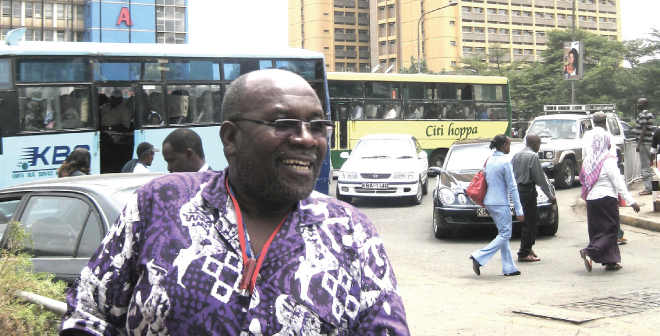
On May 21, 1986, Paddy Onyango was teaching a class at Ogada Secondary School. He was three days away from his wedding day. At 4:00 p.m., he and his class were abruptly surrounded by uniformed police officers with guns pointing directly at them. The officers had come for the former student leader as part of the nationwide abduction, arrest and killing of all those suspected of being government dissidents following the botched 1982 coup.
Paddy ended up at the infamous Nyayo House—a government building designated for the detention and torture of democracy campaigners. The foundation of Nyayo House bore dark water-logged chambers. Each cell was bare faced with only air and water ducts. The first 12 days of Paddy’s ordeal entailed standing naked in a pool of water until he fell down from exhaustion. The next 12 involved starvation.
The torture varied from beatings using planks of wood, to shoving ballpoint pens through his urethra, to having the tip of his genitals singed with a burning cigarette butt. Hot and cold air would be released into his cell at random, and needles were also stuck in his fingernails.
On one occasion, Paddy was stripped naked before guards brought in his fiancée. The guards fondled her infront of him. “That pained me,” he says, lowering his head. His fiancée was then whisked away. Next thing, Paddy heard her screaming from the next room. As a result of being raped by the guards, the woman he loved became pregnant and later committed suicide.
Paddy was released from Nyayo House and moved from one maximum-security prison to the next. He was eventually stationed at Naivasha Maximum Prison for 18 months, locked in solitary confinement with only one hour of sunlight a day. In 1988, a week after release from detention, Paddy bumped into Mr. Munene*, the chief torturer at Nyayo House who drafted “schedules” for each prisoner. That particular day along Aga Khan Walk in Nairobi’s CBD, Munene looked haggard—dry lips, scaly feet, dressed in faded clothes.
Paddy, without hesitating, greeted the former prison guard and offered to buy him lunch. Munene was apprehensive, but eventually agreed to it. He proceeded to open up to Paddy. Munene had grown tired of torture and instead began serving as an emissary for the prisoners. He would provide those in his charge with small pieces of paper to write on so that he could prove to their families that they were still alive.
Munene was eventually caught by his superiors and dismissed without benefits. At the time, he had a young daughter who had graduated high school with several distinctions. She wanted to study medicine, but the government denied her access as retribution for her father’s betrayal.
Paddy, though, had received scholarship opportunities for his family from Amnesty International as part of their rehabilitation program. After hearing Munene’s story, he passed on the scholarship from his family to that of his former torturer’s. The daughter would become a doctor after all.
Still in touch with the Munene family, Paddy is now married with three children of his own. He spends his days as a human rights, gender, disability and constitution consultant with intergovernmental organizations.
“There is no need to get packed in hate. It is good to let go and in that way set yourself free. Social costs and sacrifices need to be made for the struggle,” concludes Paddy.
*Mr. Munene’s full name has been withheld to protect his identity.
| < Prev | Next > |
|---|
By Rose Odengo


LATEST EVENTS
AROUND THE WEB


