Of Lions and Gazelles
In January 1984, Time magazine ran a cover story on the African continent. “Africa’s Woes: Coups, Conflict and Corruption” summed up what had been a tumultuous decade for the continent. For the better part of history, much of the world’s views on Africa has tended to focus on two stereotypes:
Crisis-Ridden Africa: This is where war, strife, unrest and ruthless dictators murder, pillage and loot while corruption is everywhere. This is where AIDS has plundered a generation, and famine is met by an unprepared population, season after season, thanks to poor planning and infrastructural problems.
Exotic Africa: This is where the lions run free in the vast grasslands and into the beautiful African sunsets. Full of sandy, abandoned beaches. And as long as there’s no crisis, there’s always a leopard in a tree to be seen and herds of wildebeest to watch.
And 16 years later after the Time magazine cover appeared, The Economist made what seemed a declarative statement at the time with their May 2000 cover story: “Africa—The Hopeless Continent”. Now, Africa’s emergence is imminent from a business, innovation and technology point of view, and the world is beginning to take notice of this evidence.
According to McKinsey Global Institute’s 2010 report, “Lions on the Move: The Progress and Potential of African Economies”, Africa’s GDP, as of 2008, stood at US $1.6 trillion, roughly equal to that of Russia’s or Brazil’s. Meanwhile, the African consumer spending power has grown close to US $860 billion.
It’s estimated that by the year 2020, Africa’s collective GDP will be US $2.6 trillion and spending power will increase to US $1.4 trillion, with 50% of Africans living in cities by 2030. The tides have turned, and The Economist’s most recent African cover was titled “Africa Rising”, dedicating the issue to the great role the continent will play in the global economy over the next decade.
With over 620 million mobile phone subscribers, a big part of Africa’s influence and success will come down to one thing: the mobile phone. In 2002, there were 49 million smartphones in Africa. Now there are over 620 million. Africa surpassed Latin America to become the second largest mobile market in the world after Asia.
At this rate, every single person in Africa could own a handset by the year 2020. And while much of the developed world has come to understand the Internet and experience it through a PC and then portable devices like laptops, smartphones and tablets, many Africans will experience it for the first time on the mobile phone. It is the number one way to get online in Africa—the default device.
Aggregation of information is another important skillset that African entrepreneurs have mastered. The web is like drinking from a fire hose. The challenge of high amounts of data from Twitter, SMS, email and RSS is enormous. To make sense of it and visualize it is a critical skill that the Nairobi-based company Ushahidi has mastered. They are going live shortly with their new promising platform, Swiftriver.
For the Silicon Savannah to be a reality, not only in Kenya but also in the rest of Africa, there needs to be better proof that there’s an ecosystem and not just one or two outliers. In Sub-Saharan Africa, the consensus is we’ll have several key areas where innovation will take place. The pace of innovation will be driven by a number of factors. One of the most interesting of these is the “hub”.
With over 35 hubs in 13 countries across the continent, they are becoming the touch points for innovation across Africa in areas such as Silicon Cape in South Africa and Silicon Savannah in East Africa. One of the trends to watch out for is Nigeria as it becomes a contender in technology in what Mbwana Alliy described as the “Silicon Lagoon”.
You can pay closer attention. Get more Africa in your timeline/ stream/newsfeed by subscribing to African blogs and content. Follow the moves, and hear what’s happening on the continent, not solely relying on mainstream media for your African intake.
And to motivate you, I leave you with a little story: Every morning in Africa, a Gazelle wakes up. It knows it must run faster than the fastest lion or it will be killed. Every morning, a Lion wakes up. It knows it must outrun the slowest Gazelle or it will starve to death. It doesn’t matter whether you are a Lion or a Gazelle, when the sun comes up, you’d better be running.
Africa’s running. Are you?
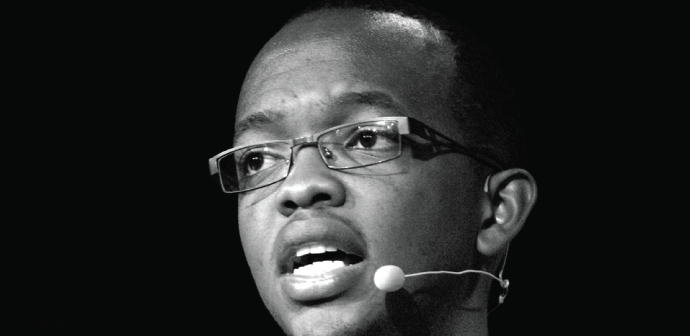
Mark Kaigwa (www.mark.co.ke)is a social media strategist and professional speaker. This is an edited version of his keynote address at re:publica 2012 in Berlin Germany
| < Prev | Next > |
|---|
By Mark Kaigwa


LATEST EVENTS
AROUND THE WEB


