Getting Green with Don Cheadle
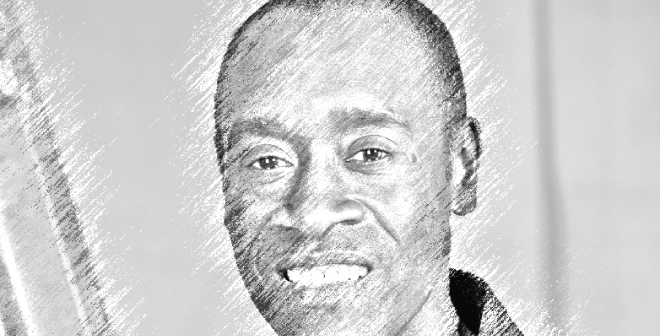
Actor, producer and humanitarian Don Cheadle, best known for his roles in Boogie Nights, Hotel Rwanda, the Ocean’s film series, Crash, Traffic and Iron Man, was appointed two years ago as Goodwill Ambassador for the United Nations Environment Programme (UNEP), headquartered here in Kenya. This month, the Academy Award nominee speaks to UP about why he believes each of us can play a critical role in tipping the scales towards a more sustainable future.
UP: How did you end up as a United Nations Goodwill Ambassador?
DC: Well, when the Secretary-General taps you on the shoulder and requests that you join the ranks of the UN, he may not be Don Corleone, and you may not be in The Godfather, but you do realize that you better not refuse.
UP: What inspired your interest in humanitarian issues?
DC: In 2004, I had the chance to play the lead in Hotel Rwanda, a film about a man
and his family’s plight against genocide.
We received critical acclaim for the film, but more importantly, we attracted the attention of the political community. One thing led to another, and I found myself between Darfur and Capitol Hill, Washington, D.C., raising awareness and trying to influence political will. I realized then the power of a well-told story and its ability to reach across all sorts of divides to deliver a message. I realized that each of us has a role to play.
UP: How did this activism segue to environmental issues?
DC: Seventeen years ago I became a dad and experienced a shift in the matrix that decided that someone other than Don Cheadle would be considered first when it came to the important issues in life. After the birth of my second daughter, I started the inevitable process of projecting into
the future. And as those of us who have kids know that the future starts coming at an alarming rate. I didn’t like what I was seeing. I decided to try and make my life greener, and to use what influence I may have to inspire people to learn more and connect the dots for themselves.
UP: Do you see environmental and humanitarian issues as being separate?
DC: No. If you are a humanitarian you have to be an environmentalist. If we don’t have a healthy, sustainably-managed planet, we will forever be making bad decisions based on oil prices and fighting over limited resources.
UP: What do you see as the most critical
issue we face?
DC: How the planet will be able to sustaina population that is now at seven billion and that will grow to nine billion by 2050, 38 short years away.
UP: World leaders will be gathering in a few weeks at the Rio+20 Conference on Sustainable Development. It has been 20 years since the first Earth Summit took place in Rio. What would you ask our political leaders to consider?
DC: How far we have gotten (or not) in 20 years, and what the world will be like if we keep living as we have done for the last 200 years—with our model of produce, consume and waste. We all need to take part in letting them know that we are ready for a game-changer, the next big
idea.
UP: And what is that?
DC: I think it’s what UNEP calls a Green Economy—an economy that is business, people and planet-centric. It means more jobs and the real possibility for a better future.
UP: Any parting words?
DC: Developing countries like Kenya are already ahead of the game when it comes to greener solutions. So keep it up and do whatever you can. Small things have a big impact when enough people get involved. World Environment Day is a good start. Learn more and join us.
For more information, visit www.unep.org/wed
| Next > |
|---|
By Frances Woodhams


LATEST EVENTS
AROUND THE WEB


