

5O Years of Live Music in Nairobi
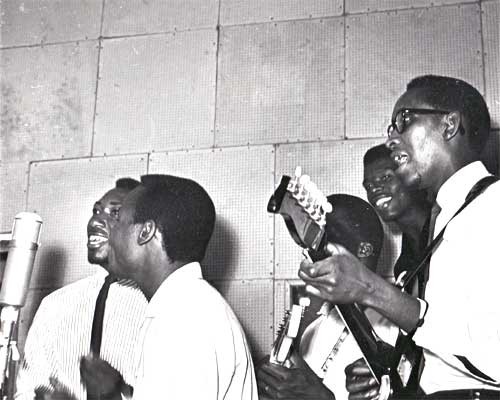
Since 1963, Kenya’s popular music has grown out of diverse influences, including Congolese rumba, South African township music, Arabian sounds and a wide range of European and American styles. Immediately after independence, the nation danced to the African Twist, a rhythm not unlike the kwela from South African townships.
Charles Worrod, an Englishman who had moved to Africa in the years after World War II, bought a record company and put together the most influential Kenyan band of the 1960s: the Equator Sounds Band. The group consisted of Fadhili William, Daudi Kabaka, Gabriel Omolo, two Zambians, Peter Tsotsi & Nashil Pichen and Ugandan, Charles Sonko.
Although Fadhili first laid claim to the authorship of the iconic song Malaika, he later admitted in a letter to Worrod that the song was a “combined effort” between him and Grant Charo, a fellow musician at the defunct East African Records, who died shortly after the first recording of the song in the late 1950s.
When Charles Worrod took over the old catalogue of the company, he re-recorded Malaika with Fadhili using a South American Beguine rhythm. It is this version of the song that became an international hit with interpretations by Miriam Makeba, The Brothers Four, Boney M, Angelique Kidjo and many others. Fadhili died on 11th February 2001 at the age of 62.
Gabriel Omolo, another product of the Equator stable, became the first Kenyan musician to be awarded an international Golden Disc for the sales of his single Lunchtime in 1974. Phonogram Records certified a total of 150,000 copies of the single sold in East and West Africa by that time. Omolo and his band, Apollo Komesha had recorded 20 singles for Phonogram with total sales of 300,000 copies, more than any other of the 80 bands contracted to the company in Kenya at the time.
The late 1960s and early 70s was the era of the boogies; daytime dances were thriving in all major towns in the country. There was intense rivalry between the top bands of time, such as The Hodi Boys and Air Fiesta Matata, to attract the teenage crowd to their boogie dances. Venues like Arcadia and the Starlight Club in Nairobi would be packed every Saturday and Sunday afternoon as fans danced the afternoon away to live music.
The live music scene suffered a major setback when the authorities banned the boogies in 1972 for “corrupting morals of the society” and by the end of the decade, disco had arrived, and club owners chose to invest in sound systems and hire DJs to play music instead of paying high maintenance live bands. In the 1980s, the music industry was suffering from poor sales and piracy, lack of airplay on radio and the dominance of disco, leaving many of the bands desperately clinging for survival or putting the musicians out of business altogether.
The 1990s saw the birth of a whole new generation of artistes, influenced by American hip-hop and Western pop styles. This boom was fueled by the liberalization of the radio,TV and the switch to digital sound recording, which made the process of
production increasingly accessible. Music was beginning to attract
corporate sponsorship at events like The Tusker Beats of Season, sponsored by Kenya Breweries and the Benson & Hedges Gold and Tones. The Government had ceded control of radio and TV so there was a lot more airtime to accommodate Kenyan music and overnight you could feel the impact of emerging performers like Kalamashaka, Poxi Presha and arguably, the hottest star of the time, Hardstone.
The latter, whose real name is Harrison Ngunjiri, became a national sensation, thanks to the hit single “Uhiki” a clever rendition of a traditional Kikuyu wedding song over the beat of Marvin Gaye’s Sexual Healing.
His success landed him shows with some of the biggest names in the music business at the time. Multiple Grammy Award winner Lauryn Hill who was then riding high as a member of The Fugees appeared as the opening act during the launch of Hardstone’s CD at the Impala Floodlit Rugby tournament in 1997.
The Ogopa DJs, a production outfit and record label developed a hard driving club sound, recruited the best new singing talent and produced a number of compilation CDs that was to virtually dominate the radio and club scene for the next few years.
Formed in 1999 by Lucas and Francis Bideko, the Ogopa brand grew into a powerful presence in Kenya and eventually in East Africa, through the success of artists signed to the label. Between 2000 and 2004, they put out three compilation albums titled, Ogopa One to Ogopa Three with songs that dominated radio and the clubs in a way that no other producer had.
The hits included Ninanoki by the architect turned rapper Nameless and female star Amani, Monalisa by Deux Vultures and African Woman by Kunguru on Ogopa One. The second Ogopa was the launch pad for artists like Big Pin, and Kleptomaniacs. This was party music at its very best with feel-good lyrics in Sheng, usually celebrating wild revelry, girls and opulence.
A young rapper E Sir (Isah Mmari), who had been turned down by Ted Josiah in 1999, was eventually recruited by the Ogopa DJs and released his debut album Nimefika in 2002. The album was a huge success thanks to songs like Moss Moss, Kamata, Leo ni Leo and Boomba Train but E Sir’s life ended in tragedy when he died in a road accident in March 2003, aged just 22.
In the last decade, a new generation of stars has emerged, notably, Daddy Owen, Juliani, Just A Band and Camp Mulla, while the music distribution and promotion networks have been transformed through mobile phones, social media and digital downloads.
By Bill Odidi.








jurassic park builder triche 2014 says:
It’s not typical process in order to associate economics having jurassic park builder triche.
Generally, jurassic park builder triche 2014 could well be considered to have no impact on your financial status, although generally
there are in fact a few results. The sales sector connected with jurassic park builder triche android is truly a 3.