Is Nairobi Virtuous Enough?
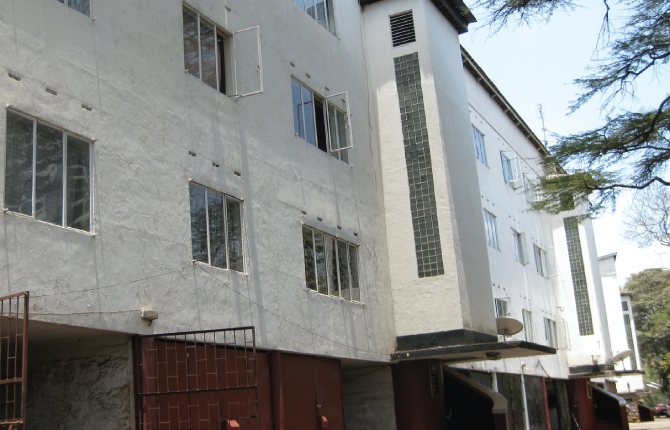
From our homes to our work places, our schools and our communities, architecture affects us all. It is the arena in which the rituals of our everyday life are played out. Architecture designs our lives through the spaces we live in. It has the ability to improve and change our lifestyle, make us happy and productive. Equally, bad architecture can be oppressive and make us miserable. Good architecture has historically been judged by the ancient Vitruvian measure of Firmness, Commodity and Delight; this still rings true.
Only when a building is firmly constructed, serves the functions of its users and is pleasing to the eye, is it considered to be good architecture. Architecture reflects the society that builds it, but also affects the way that society develops. It is a permanent statement about the condition of our society. Reading the city is like reading the history and politics of a place in the layers of built form over time.
One example is the Delamere Flats designed by Ernst May in 1939 and completed in 1951. This is a building type that is deeply connected to human experience and reveals much about the state of Kenyan society. The project represents a rejection of colonial influences, and marks a particular identity that weaves local building practice of the time with climatic and modernist influences.
May’s use of logic, optimism and idealism aimed to improve living conditions, and establish a model for a good standard of affordable housing in a rapidly-changing society. These are issues that are still as relevant today as they were when the apartments were built over 60 years ago. There is plenty more interesting architecture to discover in Nairobi. A wander through the city centre will introduce many of the capital’s well known and loved buildings.
There are the obvious monuments such as KICC, City Market, Holy Family Basilica, and many of the government and university buildings. There are also surprising courtyards and atriums to be discovered through passages within some of the non-descript office buildings. But these architectural gems are mostly produced in the early post-independent period, and, sadly, thereare few contemporary standouts.
As a discipline, architecture should pioneer new ways of living, explore new materials and technologies whilst rooting itself in its context and time, ensuring that what we build is economically, environmentally sustainable, and appropriate for its users. Most importantly, architecture should be about the production of beautiful buildings and spaces that help our cities and communities function well and make us happy. In as much as there are so many plans afoot (from Tatu City to Globe Waterfront) that purport to carry us into the future. Do these designs live up to the basic Virtruvian measurements? Does it serve us? Let us build the future with this in mind.
Bethan Rayner has a Masters Degree in Architecture at the University of Edinburgh. She has worked in architecture practices in the U.K., U.S.A. and Mexico, and has had an apprentice-style education as a furniture maker in Scotland. She is the co-founder of Studio Propolis, a Nairobi-based full service design workshop focused on crafting beautiful, imaginative, quality spaces and furniture.
| < Prev | Next > |
|---|
By Bethan Rayner


LATEST EVENTS
AROUND THE WEB


