Artists, Jubilees and Democracy
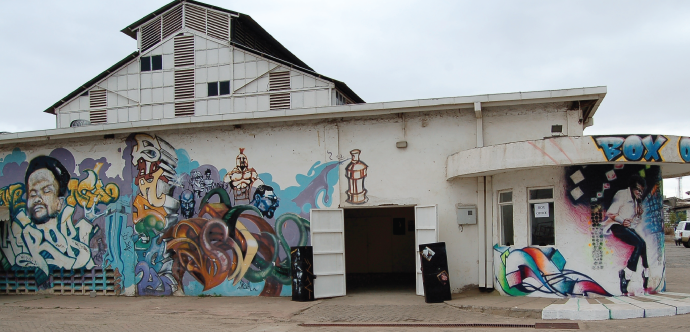
In March 2013, hardly four weeks from now, Kenya will hold an election that will be special in at least two ways. One, the election will take place under a new Constitution. Two, this particular election year will also mark the Golden Jubilee—fifty years of an independent Kenya. Undoubtedly, every year is a Jubilee occasion for somebody, somewhere. So, fifty years on, in a newly emerging environment, as Kenya moves to place more power in the hands of the people and to uphold every citizen’s fundamental freedoms, can we hope that artists too will flourish in an expanding democratic space?
A Jubilee year for Kenya provides a chance to examine this question more deeply. By 1963, at Kenya’s uhuru, many colonial settlers were also celebrating the Golden Jubilee as they had come to call the colony their ‘home’. But the Jubilee became a time of bitter betrayal as their push for an independent Kenya of multiracial rule failed and instead, majority African rule won the day. (Remember the Lancaster House Conferences?) If, for some, that seems very far back in history, we have had a more recent Jubilee commemoration: in early December 2012, President Kibaki gave his “farewell” speech to Parliament, also marking fifty years as an MP.
And for his Jubilee tenure, a proposal was floated that he be gifted KES 50 million—yet another bitter betrayal, this time to post-colony Kenya perhaps? Certainly the rumbles ahead of the 2013 elections and Jubilee celebrations, so far, could easily leave one skeptical that there will ever be any substantive change – the lateness of election preparations; the lower-than-expected voter registration; the Supreme Court decision to “phase in” the two-thirds gender rule; and not to forget the shadow of The Hague. But it is precisely in such moments of political and social discomfiture that artists can, through their work, provoke discourse and prod us to probe our beliefs and validate our judgments. Yet the Kenyan artist hasn’t always fulfilled this role and been what the Bahá’í poet, Roger White eloquently describes as a “bulwark against fundamentalism, stagnation and sterility.”
Previous political environments of fear and censorship forced artists into silence, into exile and even into pandering to the status quo. Remember the Nyayo era when practically all choral music was an ode to Baba Moi? Can you recall “gems” such as Rais Moi Tawala (President Moi is the ruler) and Fimbo ya Nyayo? (Nyayo’s Batton) (To be fair, a number of these Moi ditties were musically quite accomplished, having been crafted by solid Kenyan composers). Still, in a new political dispensation, we cannot assume that artists will readily seize the moment. This was well-illustrated a few years ago at a meeting of East African artists, by a Zanzibari artist named Kijogoo, who narrated: Once there was a chicken tethered to a bush by a string. It tugged in vain, wishing to venture out for delicious bugs.
But after struggling for some days, it accepted its fate. One day, however, the chicken was untied. It took a few tentative steps forward, sensing it was free. Suddenly, it panicked and fled back to the confines of the tree it had come to know as its space. The chicken, Kijogoo concluded, is the East African artist. The message here for Kenyan artists is clear: The string has been cut. Let us not be afraid to move into the wider civic space to play our part. Let us untether our minds.
Artists down the ages have been society’s counter to rigidity and complacency, the vanguard of new ideas and insights. In the new Kenya, with a Constitution that explicitly safeguards artistic freedom of expression, artists should not shy away from this opportunity to step forward and occupy centre-space in the community. Joy Mboya is the Executive Director of the Performing & Visual Arts Centre Ltd, known as The GoDown, a nonprofit facility providing subsidized space and residency opportunities for Kenyan artists
| < Prev | Next > |
|---|
By Joy Mboya


LATEST EVENTS
AROUND THE WEB


