Why You Must Attend StoryMoja Hay Festival
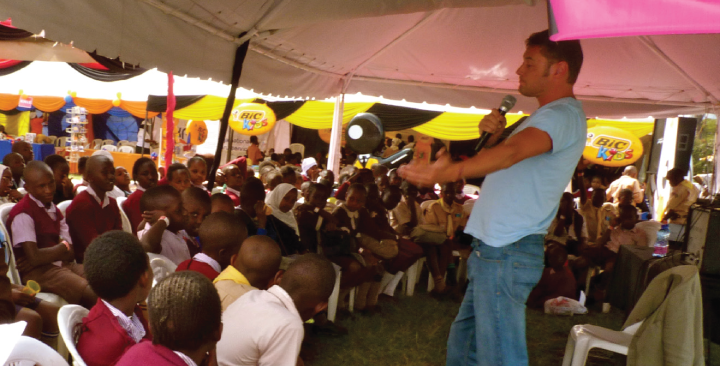
How often does one get to meet Ben Okri, the Booker Prize-winning novelist and poet from Nigeria? The short answer is “Hardly ever.” What of Hari Kunzru, winner of both the British Book and Somerset Maugham awards? Yusef Komunyakaa, the Pulitzer Prizewinning American poet with a prolific repertoire? How about storyteller, poet and New York Times bestselling author Beth Lisick? Short of using Photoshop to insert yourself into the company of one of these accomplished scribes, it rarely happens.
And yet, it has. The 2011 StoryMoja Hay Festival team brought Ben, Hari, Yusef, Beth, and a plethora of local and international illustrators, poets and writers within shouting distance of an attentive audience. And they’re going to work their magic again. With the fourth edition of StoryMoja comes a new venue, the National Museums of Kenya. Utilizing every square inch of the sponsor’s vast cultural space, you can expect to attend workshops and lively lectures in rooms teeming with the world’s history. The best part: A festival ticket also includes free access to the museum’s offerings, from taxidermy and science to artistic creations.
(And don’t forget—free access to the snake park too!) The heart and soul of the festival remains literary enlightenment. And to that end, an impressive selection of over 60 local and international poets, writers, artists and thinkers are expected. One such guest is Lola Shoneyin, winner of the Association of Nigerian Authors’ Awards. Her background as an educator has her excited about the prospect of working with young minds. “I’m a teacher, so I’m really looking forward to doing poetry workshops with children.
I love the purity and innocence with which children approach poetry,” says Lola. 2011 Caine Prize winner, NoViolet Bulawayo, is bracing herself to be blown away at every level. She states, “I’m especially looking forward to meeting great writers and thinkers, to insightful discussions, music, fun, just the whole Why You Must Attend StoryMoja Hay Festival FESTIVAL By Wanjeri Gakuru shebang.” Worthy of note as well is the plan to launch laudable homegrown initiatives at the festival. One such venture is the inaugural Wangari Maathai Memorial Lecture, expected to be delivered by a surprise guest (rumour has it that both Arundhati Roy and Angelique Kidjo have been approached for this honour.) Another interesting project is “Africa’s Wildest Stories”, the brainchild of Paula Kahumbu at Wildlife Direct.
This audio/video series utilizes the power of storytelling to help preserve wildlife. By tapping into the real-life experiences of elders from different cultural communities, “Africa’s Wildest Stories” unearths stories of bravery, mysticism and symbiosis that have connected human beings and wild creatures for centuries. The UP Lounge will also make an appearance again. This year, we’ll offer writers’ workshops facilitated by our editorial team.
Look out for a discussion on unleashing creative energy with consultant Ross van Horn, as well as DJ sets by our in-house “spin master”. And make sure to participate in our fun open call for illustrators that will be going on at our tent throughout the festival. The 2012 StoryMoja Hay Festival (September 13th to 16th) will be held at the National Museums of Kenya. You can find the festival program at www. storymojahayfestival.com. Read interviews with NoViolet Bulawayo and Lola Shoneyin in full at www.upnairobi.com.
By Wanjeri Gakuru


Using Graffiti Against the “Vultures”
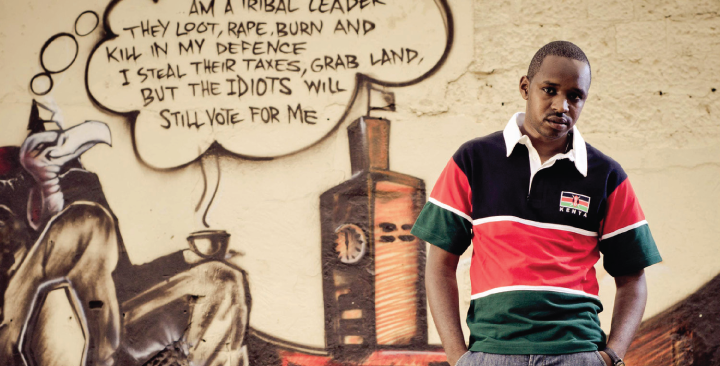
Boniface Mwangi, 29, has a life that makes for a fascinating tale. A primary-school dropout, he has gone on to achieve a lot for both himself and our country. Among a plethora of accolades, Boniface was named the 2008 CNN Multichoice African Journalist of the Year. That same year, he founded Picha Mtaani, a travelling exhibition on post-election violence, and set up PAWA254, which serves as a creative hub.
In 2012, Boniface came up with a controversial graffiti campaign dubbed “Vulture Graffiti”. His group of graffiti artists produced huge murals, depicting various Kenyan politicians with the bodies of vultures. Dressed in black hoodies with a vulture on the back crossed out with a red X, they roamed Nairobi’s streets to manifest their protest. It captured the imagination of the nation (and beyond), provoking Kenya into thinking more about its leaders. “Kenyans are interested in the campaign because we communicate with them. The language that we use.
The depiction on the wall is targeting everyone, even the illiterate. The visual is our great strength,” enthuses Boniface. Unfortunately, intimidation from the government through the City Council of Nairobi forced Boniface and the artists into a corner. Council workers would paint over any work done during the night, so the team had to rethink their strategy. Boniface now plans to start a graffiti school, producing professionals who will take their street art to other towns and institutions—and to a whole new level. The campaign aims to go viral to further boost its visibility.
Boniface says he hasn’t ventured beyond the city because “it is dangerous out there.” He explains further, “You can get shot easily outside Nairobi. A major challenge is the misinterpretation of our motives. People appreciate our work when it favors their candidate of choice. The moment you try to give facts, you get into trouble with one party or the other.” Why graffiti? “It is art, not vandalism, even more when graffiti has such a necessary function,” Boniface stipulates. “We are informing and empowering people to know what is wrong and what is right. It should be encouraged. Unity is our strength and, if we join hands as young people, we can change our country.” Using Graffiti Against the “Vultures” By Alma Midega Email at This e-mail address is being protected from spambots. You need JavaScript enabled to view it .
By Alma Midega
An Uncritical Life is Not Worth Living
Most people consider education to be an unequivocal good. It is a catalyst for progress and positive change for both the individual and society. However, a good education is worth very little without the ability to critically question the dogmas that filter our everyday lives.
In a world where information flows faster and becomes increasingly accessible, our ability to question knowledge becomes ever more important. We need to teach our children in a way that develops their understanding of the world but also develops decision-making and problem solving.
Education should be a vessel for emancipation of our own misconceptions and deceptions, as well as the foundation from which we criticise and develop the society we live in. That is why I have dedicated myself to the study of critical and creative thinking.
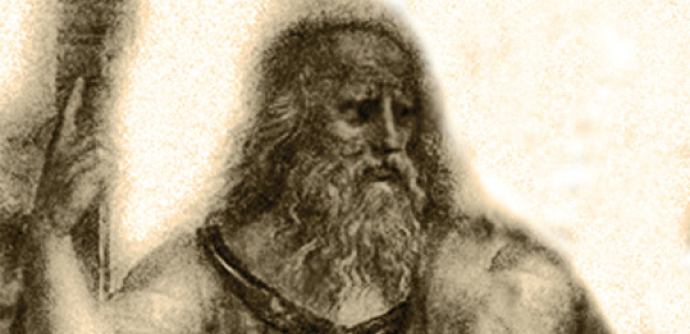
The Greek philosopher Socrates can be said to be the father of critical questioning. He believed that an unexamined life is not worth living. He stuck to that creed to such a degree that this method of meticulous scrutiny is today known as the Socratic Method (ADD HYPERTEXT www.socraticmethod.net) So what can we learn from a Greek guy who died a little less than 2,500 years ago? For one, he teaches us to question authority.
Socrates raised the fact that one cannot depend upon those in “authority” to necessarily have sound knowledge and insight. He demonstrated that people can have power and high position, and yet be deeply confused and irrational. That is why it is imperative to always question authority and ask, Are we really doing things the right way? But questioning authority can be a dangerous affair. In Socrates’ case, his principles lead to his demise and, subsequently, to his execution.
However, critical thinking is not essentially a negative enterprise. It is a positive scepticism. Therefore, the kind of criticism we should aim for is not one that just seeks to reject, but that which aims to resolve. Another thing Socrates teaches us is a certain humility towards our own ability to be right. As he said: “All I know is that I know nothing”, which emphasizes the importance of directing the critical questions towards ourselves. Socrates calls for a thorough critical evaluation of our own lives and opinions.
This also means we have to learn to recognize and control our own biases, coming to view our own beliefs with the same scepticism that we use on others. Education that transforms is the only education that can truly be said to make good citizens. The essence of critical thought can be boiled down to four areas. Ridding yourself of dogmatic thinking, questioning all beliefs, trusting that knowledge is difficult but not impossible, and always striving for truthfulness and tolerance.
This, to the best of my opinion, is the path to tolerance, harmonious co-existence and a recipe for human happiness.
By Prof. Tom Destiny Namwambah. PhD
“Nudity is not a sin”
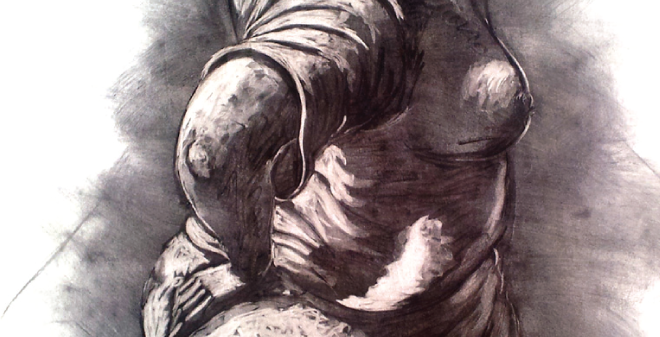
I opened the door to the art studio and found myself looking right at a pair of breasts. Welcome to painter Patrick “Panye” Mukabi’s fleshy world. Panye, 43, is inspired by the African woman, the beauty in her well- rounded figure, and the play of light and shadows on her body. Mukabi indulges in figurative painting. “As an African man, I paint what pleases my eye [and] that is the round African woman’s body.
Women are allowing, their expressions are always enamoring. Men never let their guard down and slim women do not possess the striking effect that the round figure does. I have a disease of painting women. Perhaps I need a doctor,” he says. Few artists on the African continent paint nude women. Mukabi’s endeavor is to paint one hundred such women. He explains, “Why one hundred? It’s the first number that comes to mind that is as whole as the women I paint.” Mukabi is a professional graphic designer. He attended the Kenya Polytechnic University College in Nairobi, and landed a nine-to-five job as soon as he graduated. “I quit the job after a week,” he says.
“I cannot work at a desk. My passion lies on canvas.” He is presently working on a series dubbed “cover girls” that features nude paintings of plus-size African women. Mukabi calls them his cover girls because they appear on his canvas as his models. “In this age, women are doing what it takes to be model small. My painting empowers the African woman. She gets to see herself from different eyes. Consequently, she understands that she is beautiful, powerful and can be taken as she is.” Deplorably, many do not understand his art, and Mukabi has had to deal with many faces of controversy from having his artwork carted to a police station on account of indecent exposure to dealing with insecure spouses and religious fanatics.
On nudity being a sin, he says, “Nudity is not a sin. If God wanted us to be dressed, He would have created jeans and a t-shirt on the seventh day. The paintings are not prurient or degrading. I feel sex sells everything except art.” To find Patrick Mukabi’s work, call him on 0723 708 065, or email him via This e-mail address is being protected from spambots. You need JavaScript enabled to view it .
By Alma Midega
Urban Allegiance-One mission, one movement
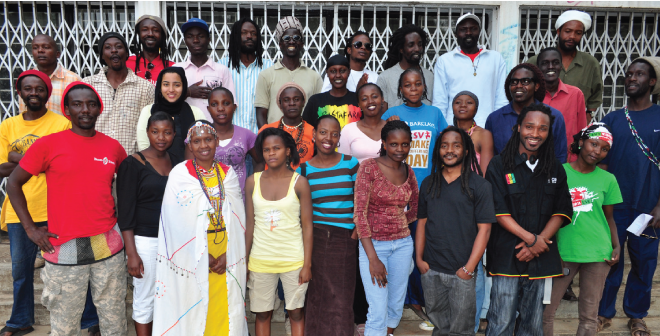
A new initiative launched on March 31, 2011, P.A.U stands for “Pamoja kwa Amani na Upendo”. Roughly translated, the organization’s overall mission is to bring the whole world together as a single community, one that lives in peace and love. A registered international C.B.O. (Community-Based Organization), the idea for P.A.U came about at the NRBLN-BLNRB music project, which was hosted by the Goethe-Institut in Nairobi. It featured local veteran artists like Ukoo Fulani, Abbas and Radi, as well as their German counterparts, such as Jahcoozi and the Teichmann brothers.
According to P.A.U’s manifesto, all people are welcome to join and unite for “one love, not siasia (politics)”. A smallbudget operation, the C.B.O. has had to dig deep into its own pockets to make the organisation a success. P.A.U is accepting donations of equipment to set up training workshops for its 70 members. Chairman Richard Mwawasi, who doubles as a hip-hop artist “Richie Rich“, says P.A.U is also open to partnering with other like-minded organizations.
Charles Ogeri aka Magao, P.A.U’s assistant secretary, adds that they intend to push implementation of policies that will benefit the youth. How? By primarily inviting ministers to take part in projects that support “edutainment“ (or education+ entertainment). The seasoned drummer admits that P.A.U may still struggle with certain stereotypes, such as the pursuit of one’s dream in the arts is not achievable.
“There is an industry that exists, one that needs to be built upon and believed in, “ says Magao. “We want to change the Kenyan misconception that enjoying local attractions is only for visiting tousists. P.AU seeks to promote local tourism, while simultaneously acting as a boiling pot of urban culture. “ The organization, based off Harry Thuku Road at the Kenya Cultural Center, meets every Thursday at 2 :00 p.m. Each meeting requires attendants to pay Kes 50. Future events include the launch of their Upendo 2012 campaign at the Kenya Cultural Center on March 7th, as well as a street party on March 31st (further details to come).
By Dorothy Kang’ethe
LATEST EVENTS
AROUND THE WEB


