Artists, Jubilees and Democracy
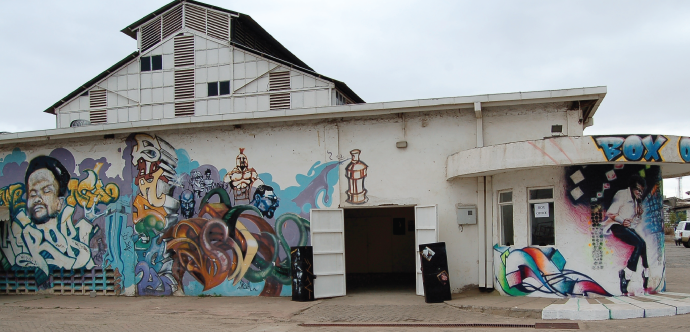
In March 2013, hardly four weeks from now, Kenya will hold an election that will be special in at least two ways. One, the election will take place under a new Constitution. Two, this particular election year will also mark the Golden Jubilee—fifty years of an independent Kenya. Undoubtedly, every year is a Jubilee occasion for somebody, somewhere. So, fifty years on, in a newly emerging environment, as Kenya moves to place more power in the hands of the people and to uphold every citizen’s fundamental freedoms, can we hope that artists too will flourish in an expanding democratic space?
A Jubilee year for Kenya provides a chance to examine this question more deeply. By 1963, at Kenya’s uhuru, many colonial settlers were also celebrating the Golden Jubilee as they had come to call the colony their ‘home’. But the Jubilee became a time of bitter betrayal as their push for an independent Kenya of multiracial rule failed and instead, majority African rule won the day. (Remember the Lancaster House Conferences?) If, for some, that seems very far back in history, we have had a more recent Jubilee commemoration: in early December 2012, President Kibaki gave his “farewell” speech to Parliament, also marking fifty years as an MP.
And for his Jubilee tenure, a proposal was floated that he be gifted KES 50 million—yet another bitter betrayal, this time to post-colony Kenya perhaps? Certainly the rumbles ahead of the 2013 elections and Jubilee celebrations, so far, could easily leave one skeptical that there will ever be any substantive change – the lateness of election preparations; the lower-than-expected voter registration; the Supreme Court decision to “phase in” the two-thirds gender rule; and not to forget the shadow of The Hague. But it is precisely in such moments of political and social discomfiture that artists can, through their work, provoke discourse and prod us to probe our beliefs and validate our judgments. Yet the Kenyan artist hasn’t always fulfilled this role and been what the Bahá’í poet, Roger White eloquently describes as a “bulwark against fundamentalism, stagnation and sterility.”
Previous political environments of fear and censorship forced artists into silence, into exile and even into pandering to the status quo. Remember the Nyayo era when practically all choral music was an ode to Baba Moi? Can you recall “gems” such as Rais Moi Tawala (President Moi is the ruler) and Fimbo ya Nyayo? (Nyayo’s Batton) (To be fair, a number of these Moi ditties were musically quite accomplished, having been crafted by solid Kenyan composers). Still, in a new political dispensation, we cannot assume that artists will readily seize the moment. This was well-illustrated a few years ago at a meeting of East African artists, by a Zanzibari artist named Kijogoo, who narrated: Once there was a chicken tethered to a bush by a string. It tugged in vain, wishing to venture out for delicious bugs.
But after struggling for some days, it accepted its fate. One day, however, the chicken was untied. It took a few tentative steps forward, sensing it was free. Suddenly, it panicked and fled back to the confines of the tree it had come to know as its space. The chicken, Kijogoo concluded, is the East African artist. The message here for Kenyan artists is clear: The string has been cut. Let us not be afraid to move into the wider civic space to play our part. Let us untether our minds.
Artists down the ages have been society’s counter to rigidity and complacency, the vanguard of new ideas and insights. In the new Kenya, with a Constitution that explicitly safeguards artistic freedom of expression, artists should not shy away from this opportunity to step forward and occupy centre-space in the community. Joy Mboya is the Executive Director of the Performing & Visual Arts Centre Ltd, known as The GoDown, a nonprofit facility providing subsidized space and residency opportunities for Kenyan artists
By Joy Mboya


Animated PSA for Peace
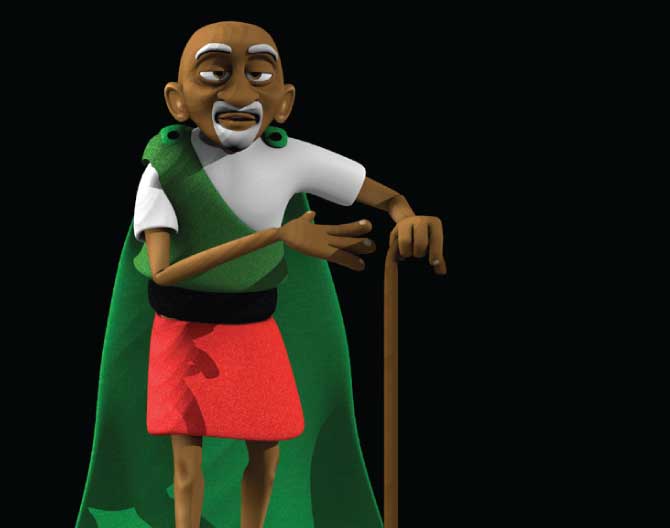
Three birds fight over who will build its nest on the branch of a tree. In a race between two tortoises, one uses a shortcut to reach the finish line. These are just two of the six animated “Wazi Campaign” Public Service Announcements (PSAs) currently airing across Kenyan television stations. Created by Buni and supported through the Kenya Civil Society Strengthening Program(KCSSP) funded by USAID and DFID, the campaign aims to inspire Kenyans to embrace peaceful elections and promote good governance.
“The idea for the campaign was born in 2006. The inspiration is the belief that change happens one person at a time. Each one of us is responsible for our own transformation, which in turn can transform the society we live in,” shares Project Director, Lara Mastropasqua. The PSAs, running between December 1st 2012 and August 2013, are in the form of cartoon characters and animals—an unusual method for a campaign that targets adults of voting age. Lara explains, “We wanted to make sure people would remember the message.” As the scenarios play out, a sagacious male narrator cautions against the negative behavior on display.
He is later on revealed to be a mzee (old man) who appears at the end of each PSA to reiterate the campaign’s slogan, “Kenya ni Jina, Nchi ni Wewe” (Kenya is just a name, you are the country). Lara reveals that, while PSAs don’t change the way people think overnight, she hopes that this one will stir up positive debates among Kenyans. “It's akin to planting a seed. It takes time for that seed to grow.” Catch the Wazi shorts on KBC, Kiss TV, Citizen, NTV, QTV and KTN as well as Fox theatres after the national anthem. Find it on Youtube, Facebook and Twitter as “The Wazi Campaign”.
By Wanjeri Gakuru
Where Are They Now?
Stop Recycling Vultures, Vote Wisely!
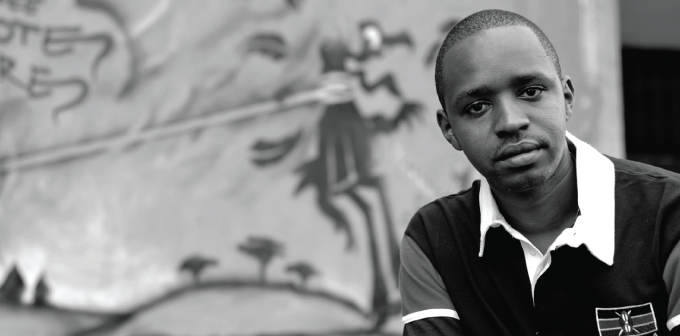
A picture is worth a thousand words, Boniface Mwangi must have known, when he embarked on the controversial graffiti campaign in streets and neighbourhoods of Nairobi in 2012. This September, UP heard from the fearless activist on his timely campaign to inspire Kenyans with political enlightenment. The archetypal vultures on which the caricatures are based represent the competitive exploitation and destruction of masses by the political elite. This graffiti venture was named “Vulture Campaign”—its members adorning black hoodies with a vulture crossed out in red at the back. It generated lots of public interest, for it’s creative way of exposing political hypocrisy.
It also attracted the ire of the City Council of Nairobi, which instructed its workers to obliterate the work by painting over it. “The ‘vultures’ [politicians] also tried to pay us into their camps but we refused so they left us alone,” he revealed. Thanks to the “Vulture Campaign”, Boniface was awarded the Prince Claus Award in a ceremony held in Amsterdam, Netherlands on December 13th 2012, attended by the country’s Queen, Beatrix. His latest campaign extends far beyond his famous graffiti murals that are covering the walls around Nairobi.
In November 2012 he took part in launching a new campaign called Ma-Vulture. “It is a shame that we have many citizens who don’t vote and let the minority recycle corrupt, selfish leaders for them then they later complain,” he says. With a mission to “to inform Kenyans without fear or favour”,Mavulture.com puts political candidates through severe scrutiny and acts as a journalistic watchdog in hopes of providing Kenyans with a more informed choice. The campaign is supported by Boniface’s usual method of operation in the form of different kinds of graffiti that is designed to create awareness and prompt reflection. “We [citizens] should keep leaders accountable to their promises. After all, life will continue beyond elections,” he advises.
Is Kenya’s first Openly-Gay Presidential Candidate still in the running?
Denis Nzioka drew a lot of reaction from the Kenyan public for two reasons: first, for being openly gay and secondly, for declaring his intention to run for president. In our February “Freedom” issue, we asked Dennis why he eyed thetop seat and in our follow interview last December, why his political ambitions have somewhat become a mystery. Acknowledging that he is yet to make a large enough impact to gain sufficient votes, he states that, after evaluating his presidential bid, he had to delay it.
“I have to work on it, cultivate an image, strategize and gather resources to have an impact but the ambition is still there,” he says. He believes that Kenya has not matured enough to judge leaders based on substance saying that the current politics is being played around tribal and personality inclinations. He is, however, appreciative of the emerging youth’s political consciousness that, given time, will eventually take the reins of leadership. “We are part of that growing leadership, we might not have the muscle and numbers but we are coming. And I’m part of that ‘Third Wave’. Watch out in about, five years,” he says.
New Insights From the “One Man Army”: Omtatah is Up and About
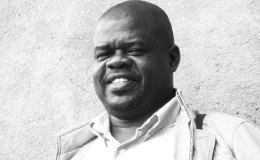
UP featured Okiya Omtatah in the October “Got Power?” issue, and it was obvious that he is an activist cut out for war. For years he has pit himself against entrenched Kenyan institutions, challenging the status quo in the quest for justice. Despite his peaceful means, violent reprisals often await him.
He has clashed with the past and present regimes over land grabbing, human rights abuses, abuse of power, as well as corruption and impunity. Last December, UP caught up with Omtatah heading to the Milimani Law Courts where he had a case challenging the suitability of the firm the government engaged to supply the Biometric Voter Registration (BVR) kits. Even though the voter registration exercise is over, his case is ongoing and slated for a hearing on January 10th 2013. He is fully recovered from the injuries he sustained in a night attack on November 8th 2012--allegedly due the aforementioned BVR case. Omtata feels that investigations by the police have been unsatisfactory.
“It has seemed that my report of the matter at Central Police Station has become just a statistical report, as only statements have been taken but no action,” he says. Among the new developments, he revealed, is his intention of vying for the senatorial seat of Nairobi County. His ticket would be on the Ford-Kenya/ CORD ticket. Why this party? “I have been a member of Ford Kenya ever since its inception in the early 1990s and it’s only this time that I’ve decided to vie,” he replies. He is of the view that he can better vouch for change as an insider than fight from the sidelines. “I have purposed to offer leadership at the senatorial level as it is the ultimate level of accountability for the county and hence national government,” he explained.
Rape in Marriage now Marital Sexual Assault
Charlotte Campbell-Stephen’s search for justice has lasted more than six years and it goes a long way in highlighting how the laws haven’t been speedy in delivering justice to sexual crime victims. We preciously covered her story in our December 2011 and July 2012 editions. In 2006, the Sexual Offences Act was enacted in Kenya in an effort to improve the legal framework in such cases, however the implementation has seemed to be halted. Even though the Task Force for the implementation of the Sexual Offences Act was constituted to hasten implementation of the laws, minimal progress has been witnessed despite the task force’s mandate lasting over five years.
However, as described in our July issue, the law exposes a separate problematic issue: Marital rape. Section of the SOA 43(5) defines intentional and unlawful (sexual) acts on which this Act is hinged, inapplicable to those in lawful marriage based on the assumption that the act of marriage itself guarantees consent to sexual intercourse. In plain language it means that it is legal to rape your spouse, because the law assumes a partner’s consent. . And marital rape is not an uncommon practice. According to the 2008/2009 KDHS 37 percent of women who have experienced sexual assault report the current husband or the partner as the perpetrator.
There’s a small light at the end of the tunnel. Section 3(a)vii of Domestic Violence Bill of 2012 passed by the Kenyan cabinet seeks to criminalize marital rape, now referred to as ‘marital sexual assault’. The offended family member/spouse may then seek protection orders from the police as investigations are carried out, after which legal proceedings will be carried out if the findings yield sufficient proof of violations.
But there is a long way to go before this is enforced. Not only does it require legislation, but it also requires a change in attitude by both law enforcement and victims. Beatrice Chelang’at, Senior legal counsel, Federation of Women Lawyers in Kenya, (FIDA) says that in most cases, women who are raped by their husbands and partners don’t really know that a crime was being committed against them.
Cases of sexual assault in marriage, she reveals, emerge in the process of attempting to find a solution for problems women mainly approach FIDA when they seek help for child custody, separation, divorce and domestic violence. “Most times, we discover from them that they have indeed been sexually assaulted by their partners when they report their partners ‘forced themselves on them,’” she says.
administrator
Nick Mutuma: More than Just a Pretty Face

Undoubtedly, Nick “Nene” Mutuma is a gorgeous young man. Tall, fit and with just the right combination of boyish good looks and an aura of inner mystery, Nick looks like he has the world at his feet. And those good genes and obvious charm have served him well. He’s had a remarkable career in TV, film and brief stint as a brand ambassador for an international fashion brand. Currently working as an Events and PR manager and radio VJ, Nick is also pursuing a career in music. It is therefore surprising to learn that he feels a little restless.
“I still haven’t figured out who I am. All I know is that I’m driven by passion for the Arts and the will to be successful,” explains Nick. The first-born son of Kenyan Diplomats, Nick grew up in Tanzania where his love affair with performance art began. “I started acting in third grade but really took it seriously when I was in the sixth grade. It’s like I had a ‘coming of age’ moment,” he says. By 2002, his family had moved back to Kenya and Nick was enrolled at Braeside School where the continued to exploring acting.
But it was when he joined USIU that Nick bagged his first professional gig. Cast as the fresh-faced toyboy of an older woman in local TV drama, Tabasamu, Nick soon became a household name, especially among the ladies. At 19, Nick was having a blast. “That was the happiest time of my life,” he recounts. He stayed on the show for one-and-a-half years learning the mechanics of a set and bonding with the rest of the cast.
His acting skills caught the attention of the producers behind Changes, an East African soap that broadcasts on MNET, a pay-TV channel available on DSTV. In 2009 he was cast as “a young man who was stolen from hospital as a child, trying to find himself”. He confidently slipped into the role with his character’s storyline still developing as the show continuous to air. The same year, when MTV’s Shuga casting team rolled into town, Nick was among the thousands who auditioned for a role in the film. It took three weeks and three callbacks to secure the lucrative role of Leo--and the full attention of a rabid fan base.
Nick explains, “That’s when the fame checked in. I wish [the Shuga team] had explained it to us. I got over 4,000 friend requests in a week! I was under a lot of scrutiny [but] it was a wasted opportunity.” Naturally shy and reserved, Nick was now all over the papers but with no idea how to capitalize on the media hype around him. However, he did graduate a year later and within the span of a week Nick landed the post of Event and PR manager at a local radio station.
That was also when he made a friend who changed the course of brand “Nick Mutuma”. Ian Mugoya is the suave, confident and sharply-dressed brother who could not understand why Nick was so laidback considering how famous he was. Their friendship quickly grew. “That guy was a superstar. I wanted to be like him,” shares Nick. Adding that Ian taught him about “swag” and how it was a way of life. (Cue the complete wardrobe change in late 2010.) “I became conscious about how I looked and started hanging out with ‘the cool kids,” he says. Thankfully, it was around the same time that he secured a deal as a brand ambassador because Nick soon learned that swag doesn’t come cheap.
“It was a very expensive lifestyle. I felt like I was living beyond my means. I was partying, drinking and living up to the hype. I was this guy that society wanted,” he confesses. Nick lost many friends along the way, they simply could not relate with the man that he had become. Within a year he was fed up with the charade. “I came to realize that everybody has their own ‘swag’. It’s not about what you wear or how you talk,” he says.
Enter “Nik”, Mutuma’s rapper-alter ego. “I’ve always been inspired by Camp Mullah so when I mustered enough courage, I got into a recording booth,” he says. The resulting track “254 anthem” was produced by Ulopa and featured singer Lyraoko. It was a catchy modern Kenyan Hip-Hop track that garnered a lot of attention because Nick was smart enough to capitalize on the media hype around the second season of Shuga. In the new edition of the series, Nick reprised the role of Leo who was now embroiled in a deadly love triangle.
But he was playing the pretty boy/ladies man combo, yet again. “Any actor wants to be challenged but I always seem to be the ‘ladies man’,” he says. Nick, whose favourite actor and film is Denzel Washington in “Training Day”, has vowed to fight against an industry that seems firmly focused on his physical attributes. “I’m looking for a rich story with depth. One that doesn’t typecast me,” he asserts. Nick has turned down several projects that kept to that vein although he admits to “missing [acting] terribly.” At present he is juggling his responsibilities on radio and events promotion the best way he can. He is also working on a new single with producer Tim Rimbui called ‘Right Words’. “It is a song that is relatable to your life,” he shares.
By Wanjeri Gakuru
Illustrator Released His Debut Comic Homeguard

Posted up against a wall, arms folded defiantly and with a steely gaze trained at the world, is Detective Ben. He is the no-nonsense cop and lead character in the fictional black and white world created by illustrator Point Blank Evumbi. At his feet is “Round Sam”, the youthful and often clueless partner Ben tries to dump at every turn.
This is Homeguard, a limited edition Kenyan comic borne from “sketchpads, a pack of peanuts, nestle ice tea packs and the drive of a mad man”. It opens on a dark city street with a sequence of overlaid images of a nondescript car making its way down the stretch of road. Within the sleek ride in the comic’s antagonist, a faceless murderer whose thoughts betray an obsession with numbers. A body is bundled out of the car only to be discovered the next morning by police and eventually, Detective Ben.
This gets the whodunit detective drama rolling. What’s cool about Homeguard for local readers is that it calls to mind beloved Kenyan 90s TV series, Tahamaki that followed a similar vein. Internationally, one thinks of larger than life Hollywood cop characters such as Clint Eastwood’s Dirty Harry, but with a hint of the more comical duos like Starsky and Hutch and Danny Glover and Mel Gibson in Lethal Weapon. Ben is big, brash and a bit of a bully who believes that “we are above all, two sides of the coin of great police work”.
Round Sam is his Afro-sporting sidekick, a little too concerned with his looks. In just less than 40 pages, the characters grow on you and you begin to see that there is more than meets the eye. And for a comic done completely in line art, the attention to detail is pretty good. The comic could do with a more thorough copyediting process and careful printing to avoid bleeding through as was evident in the copy used for this review. However, Homeguard is funny, intriguing, suspenseful and deserves two thumbs up for sheer effort and story delivery. We were left begging for more.
Homeguard retail at KES 200. To get a copy, visit www.facebook.com/HomeGuardByPBE
By Wanjeri Gakuru
LATEST EVENTS
AROUND THE WEB


