Woes of the Upcoming Artists
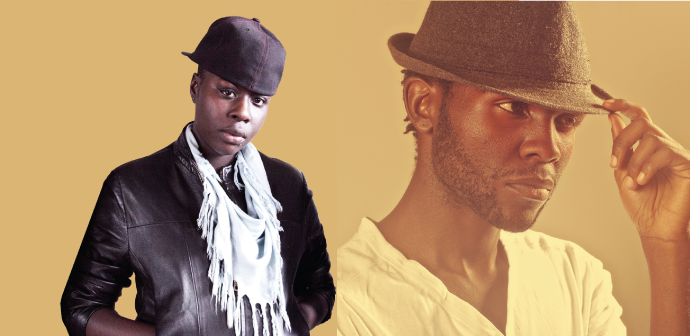
Nairobi’s urban music scene seems to be more bustling and vibrant than ever. Established artists and bands have worked hard to represent Kenya at various international platforms. But as many bands propel towards success, others are still left in the trenches struggling to get airplay, find rehearsal space and get paid for their performances. UP has talked to two of Nairobi’s promising talents who are clawing their way up the ladder in a hectic music industry. For many the struggle begins even before he/she gets to a stage.
“Through expensive, I’d rather spend [money] on a proper rehersal space for my band to feel like we are on stage. It’s my policy that if you give 150 percent at rehearsal, at a gig you’ll definitely display 100 percent”, says Max Peavey, 23, a femcee, filmmaker and recent graduate of Kibera Film School. For now, the expensive rehearsal space will have to wait. Max rehearses at a burnt down church turned recreational facility in Kibera. “It’s free but I lack the privacy an artist needs for the creative process. People are always coming to hear and interact with me,” she says. The rapper with a pretty piercing above her lip has been working on her debut mixtape for four months now. She says, “I’ve already performed at several gigs but only got paid twice.” Being a lady in a male-dominated industry has also exposed her to some prejudice.
“In Hip-Hop, you have to know the right people, DJs. I’ve had a couple take me for granted when I approach them with my music because I am upcoming and also a woman,” she explains. Thankfully, despite the cut-throat competition there are still various avenues that give a chance to dedicated artists regardless of their level of commercial success. One such venue is Choices Pub that hosts the weekly “Thursday Nite Live” event. Roots International’s Rashid is the event’s talent scout and organizer. “I check out upcoming artists during gigs and rehersals and then give a chance to those who make original music. Kenyans are eager to hear developing music styles, even if produced by unknown artists,” he says. While performing live lets the artists express themselves, nurtures their stage personas, and gives them the opportunity to interact with fans on a one-on-one basis, their music still needs airplay. Afrology, an Afro-soul band, has been together for six years now.
Band leader and singer Andrew Wambua, 25, says, “We’re still struggling to build our name, every artist does. I once had to wait seven months for a certain radio station to play my single, and after three weeks they never played it again.” Thankfully, the Internet can help offset this media monopoly. Through sites such as YouTube, Sound Cloudd and ReverbNation, artists are able to share their music for worldwide consumption. “It’s a place where no one with judge you or filter your stuff,” says Andrew. One thing is clear, these artists have the will to make it. Max Peavey is certainly not going to back down. “The industry should give people like me a chance because a lot of people are putting out crappy music and get accepted just because they are already in the industry. I have faith in what I do and this industry and that one day, I’ll get a right team and be heard.” MUSIC
| < Prev |
|---|
By Anyiko Owoko


LATEST EVENTS
AROUND THE WEB


