Sasa Nairobi
Hosted by Goethe-Institut, contemporary artist Michael Soi presents a series of 17 paintings celebrating women from all over Nairobi, bringing you different takes on the...
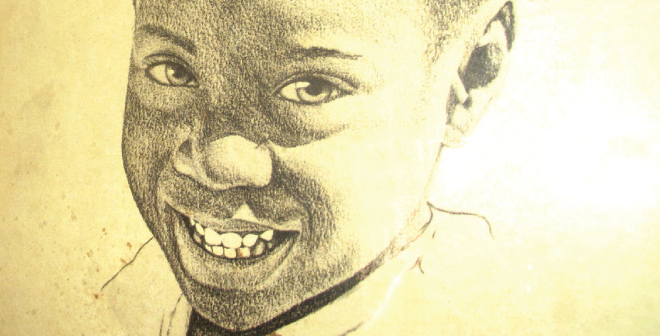
The sound of horns blaring increases by the minute, rising up like smoke into the clear blue sky. The noon-day sun shines with a vengeance on the impatient and unruly drivers along Ngong Road. And here, meandering through the chaos, comes a dirtcovered boy in tattered clothes. He reaches out to preoccupied motorists, begging for a cent to survive. It seems twelve-year old John Njau’s life has become one endless search for a meal.
But in April of this year, his usual routine took a turn for the better. Intern at Real Stars, Hannah Kniess, who was shopping at the supermarket nearby walked past John. “Do you want to go to school?” she asked him. “Yes,” he replied. And with that, Kneiss was off to find John a home, a school and a family. Determined to personally engage sponsors for the boy’s education and upkeep, Kniess took the pre-teen to Real Stars, a registered foster care organization.
Real Stars rescues destitute and disadvantaged children from hardship situations. By seeking out and obtaining support from international and local sponsors, it provides families with a monthly stipend to support the child and cover educational costs. In the most fundamental of ways, Real Stars gives such children a second chance in life.
The founder, Rose Muiu, is passionate about what she does. Having worked over a decade in the rehabilitation of street kids, she saw the need to do more. “Children need consistency. They need that one person who believes in them. And they get that through the family. And that is the environment Real Stars wants to provide for these disadvantaged young ones,” Muiu states.
Real Stars has 40 foster families based in and around Nairobi. These families either house the children for short periods while their situation is being assessed, or foster them for the duration, pending adoption. Most of the children are referred to Real Stars by local non-governmental organizations, individuals and churches around the city.
The children’s relatives are subsequently sought out and evaluated to source the origin of the family issue. In John’s case, his grandmother was an alcoholic and brewed illicit chang’aa; she wasn’t interested in raising her grandson. Kniess, who had to return to Germany a few months later, then approached a close friend and colleague to take John in as his own.
The newly-married young man, Phillip Kigondu, 29, and his wife, Mercy, 27, had just begun settling into marriage and nursing their baby when Kneiss came calling. She introduced the Kigondus to Real Stars where they could be vetted further regarding fostering John. “The first day we met John, he was quiet. But by the second day, he spoke to me, asking if he could watch a certain movie. And from then on, we started chatting,” says Mrs. Kigondu.
An extremely shy twelve-year-old, John loves school; his favorite subject is mathematics. When asked what he wants to be when he grows up, he smiles gently and then talks about his new home. “I enjoy living with the Kingondus. And I thank Mama Rose [Muiu] and Hannah.”
Sociologist Professor Pius Mutie believes that families like the Kigondus should do everything necessary to connect with the children they take under their wings. In fact, he strongly advocates that more Kenyans should explore foster care. “Our society needs to change its attitude toward taking in a child that is not your own,” he urges. “The government should undertake fostering as a national cause, encouraging it as something normal, and you will definitely see a difference.” A spanner in the works According to UNICEF statistics, some 300 million children worldwide go to bed hungry every day. And only 8% are victims of famine or emergency cases.
In Kenya, 102,000 households in various districts receive a monthly stipend of only 2,000 shillings to care for three children in each household. This governmental support is meager, far from sufficient for addressing the basic needs of an estimated two million orphaned and vulnerable children. All across the country, in the face of ever-increasing domestic abuse, violence and exploitation, these children are being used and tossed aside.
Consensual sex between minors and teachers is also a huge problem in the slums, reports Jane Anyango, the founder of the community-based Polycomdev. “These are children who actually think that it is a privilege to have sex with their teachers. It’s not news if it’s not violence. But this is one of the hugest challenges that we face.
| < Prev | Next > |
|---|


