Sasa Nairobi
Hosted by Goethe-Institut, contemporary artist Michael Soi presents a series of 17 paintings celebrating women from all over Nairobi, bringing you different takes on the...
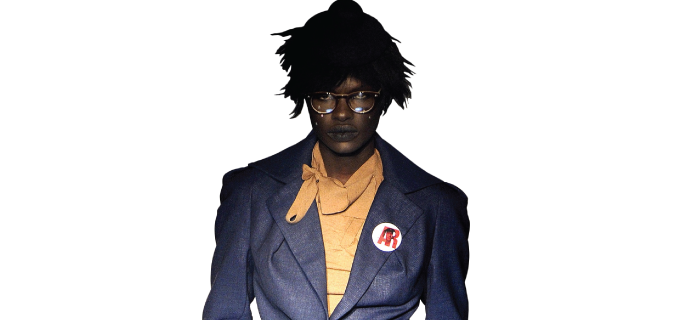
The Kenyan fashion industry has certainly had its ebb and flow. However, it remains vibrant with positive strides made in the last five decades. To get an understanding of where we are now, we want to look back at some of the pivotal moments in the Kenyan fashion industry by highlighting some of the crucial milestones from each decade. In 1976, Evelyn College of Design (ECD) opened its doors to become the first ever college of design in East and Central Africa. Director and Founder Evelyn Mungai, is a shrewd entrepreneur who noticed an education gap when it came to fashion design.
ECD pioneered Kenyan design from the outset and have fostered many great talents over the years, one of them being Sally Karago. Ten years after ECD opened its doors, she joined the school and went on to graduate and join the American College in London in 1992 only to later open one of the most noteworthy fashion schools in Kenya in 2009--Mcensal School of Design. “Our objective is to create partnerships with various associations, government sectors and private organisations to encourage the establishment of a distinctive Kenyan design industry and maintain excellent standards through education, training and competitiveness,” said Sally during the launch of AFAD last year.
True to Mcensal’s vision, Sally became the first chairperson of the Association of Fashion Designers Kenya. But back in 1986, just as ECD worked on churning out designers, Lyndsey McIntyre was busy setting up a modelling and casting agency. “Surazuri” represented some of the most famous Kenyan models such as Khadija Adams who graced the covers of Cosmopolitan and Time Magazines in 1987 and 1989 respectively. However, it wasn’t until 2003 that Lyndsey got her most important client; Ajuma Nasanyana. As the licence holder of the Ford Models Supermodel of World Competition, Lyndsey spotted the 19-year-old Ajuma, who had just won the Miss Nairobi title in the 2003 Miss Tourism Kenya Competition and encouraged her to enter the Ford competition.
Ajuma is now considered a supermodel and apart from strutting down the catwalk during the top fashion weeks of the world, she has also shot campaigns for Motorola and Vivianne Westwood. Ajuma continues to be a shining light in the Kenyan fashion industry but over a decade before she hit the international catwalks, Kenyan designers were grappling with unprecedented competition. In the 1990’s, the Kenyan Government began to liberalise key economic sectors. Textiles, which had enjoyed protection with 100 percent import tax on imported goods, now had to compete with cheaper imported mitumba and fabric. However, it was a lesson for the fashion designers. They had to find niche markets and be creative to stay in business. To help the struggling designers make a name for themselves, Kenya Fashion Week was created in 2001. Founded by Sue Muraya the fashion event became the first true platform for local designers to showcase their talent.
Sadly, after six years, the stage that was meant to “develop the fashion sector” was no more. But the mid-2000s was a good time for the industry. Envious of other countries with national dresses, the government teamed up with Sunlight (a detergent product ) to bring together fashion designers to come up with the “Kenyan National Dress”. It was indeed the first time the Kenyan government had taken an interest in the industry, and it was the last. The national dress was a failure. Worn by prominent athletes for a short period, they quickly reverted to their classic kitenge outfits. In 2008, during what is perhaps the darkest time in Kenya’s recent history the Festival for African Fashion and Arts (FAFA) was born. FAFA is regarded as one of the most successful fashion events in the region after Tanzanian’s Swahili Fashion Week. Its popularity may be due to the organisation’s values.
“We as FAFA believe that the diversity of the African continent should be celebrated in a spirit of unity. Fashion for Peace was born from the belief that positive change can come when we stop focusing on the negative and encourage the positive and the inspiring, working together as different cultures in a spirit of harmony.” Away from the glitz and glamour of the catwalks, comes the power of fashion blogging. Thanks to the bloggers a small fashion production house SOKO Kenya, got associated with one of the most powerful women in the world--Michelle Obama. In July 2011, Mrs. Obama was photographed wearing an ASOS Africa Collection item manufactured by SOKO Kenya. And in the same spirit of Kenyan entrepreneurship, Suzie Wokabi launched her cosmetic line, SuzieBeauty, as the first ever indigenous make-up line in January 2012. “SuzieBeauty is for the African woman,” Wokabi told the New York Times in an interview expressing a pride that is evident throughout the Kenyan fashion industry today. “I’ve created it for us. For the first time, we have something that belongs to us.”
| Next > |
|---|


