Sasa Nairobi
Hosted by Goethe-Institut, contemporary artist Michael Soi presents a series of 17 paintings celebrating women from all over Nairobi, bringing you different takes on the...
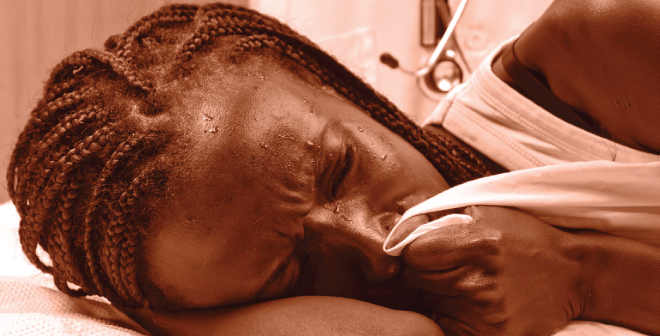
Most of us probably associate birth with celebration and gifts but it wasn’t like that for Margaret Nguvi, a hardworking coffee picker from Makuyu. Margaret found out she had cervical cancer just before giving birth to her seventh child. After a Caesarean at Kenyatta Hospital, John Mwanzia was born.
His sick mother couldn’t pay the bill so she was detained in the hospital. She was not being treated for her cancer, and did not get enough food. After KTN aired a report on her plight, she was kicked out by hospital authorities, embarrassed by the publicity. This was not the end of her nightmare, but now Margaret was not alone.
Dismayed by the television report, benefactors helped pay for cancer treatment at Nairobi West Hospital. Among these well-wishers was Pollyne Owoko, a programme manager for Wema Foundation, which aims to empower women and children. Owoko was shocked by Margaret’s case. “It never quite touched me until I saw Margaret (on television) with this beautiful baby, suckling,” the 33-year-old said. “It broke my heart.”
Margaret, who was in her mid-30s, died in hospital in December 2010. She never got to go home after John’s birth and the mother-of-seven was traumatized by her absence from her family. “People like Margaret never had an option,” says Owoko. “My hope was that Margaret Nguvi would survive to become the face of reproductive health. We tried so hard to save that woman but I guess she gave up.”
There are no easy answers to the question of how to provide adequate health care to Kenya’s most vulnerable people.But almost everyone agrees that detaining patients is not the answer. It costs hospitals money – they have to feed the detained and they take up beds. Also, there is little chance the patient will eventually be able to pay a bigger bill.
“(Detained patients) get fed last, they get very little food… they are mistreated,” says Wangui Mbatia, executive director of the Kenya Network of Grassroots Oganisations (KENGO). “You get patients with a sense of extreme powerlessness. They can’t do anything about their situation … and the bill is climbing.”
Hospitals say they cannot let every patient who says they can’t pay just walk out, and that they have fee-waiving committees to assess individual cases. But Mbatia, whose group regularly visits hospitals to count “long-stay” patients, says the fee-waiving committees don’t meet regularly enough while social workers, who should be doing background checks, are often inefficient or incompetent.
In September last year, Public Health Minister Beth Mugo reiterated a 2007 government directive waiving all maternity fees in public hospitals. There is also a directive saying care for under- fives should be free. But in practice, things are very different. Mbatia started working on this problem four years ago after one of KENGO’s members asked for help to clear a 6,000 shilling-bill at Nairobi’s Pumwani Maternity Hospital. Mbatia and a friend
paid out of their own pockets. Then, there were more requests and she soon realised that treating the cases on an ad hoc basis was impractical. KENGO decided to press policymakers on the issue and now lobbies for the release of patients. But despite some individual successes, things have changed little. Mbatia went to Kenyatta’s children’s ward last November and found under-fives detained, usually on their own because this is a cheaper, though heartbreaking, option for poor parents. “It’s cruel, and inhuman and….” Her voice trails off. She has more stories that lift the veil on the health
system in one of East Africa’s richest cities. “Take the situation, say in Pumwani, where a mother who has had a stillbirth is detained in a maternity ward with other mothers with little children … you can imagine the psychological torture of that,” she says. “We found one woman on the verge of suicide because every time babies cried, her breasts would
release milk and she didn’t have a child to feed.”So how does the National Hospital Insurance Fund fit into this picture? With only a fraction of Kenyans registered as members, it does not have the resources to provide adequate care for the most needy. Mbatia says that even the proposed new minimum monthly fee of 150 shillings is too much for those millions who live hand-to-mouth. “If you are strained for cash, then the NHIF is really a luxurious expense,” she says, adding that many services are not even covered.
Julius Muia, secretary of the National Economic and Social Council, says more people must contribute to a central insurance fund to pool the risk, but also stresses that people need to be educated as to why. This fund must also be able to deal with a larger pot of money without falling prey to corruption. Muia, who is also a chartered banker, believes more money can be found. For example, some people in the informal sector earn enough to pay into the NHIF.
“The amounts people spend on a pay-as-you-go basis are quite substantial but … you don’t have the benefit of channelling (these funds) together and organising for the provision of services in a more anticipatory manner,” he said. The money that is already available could also be used more efficiently. There could be a mix of public and private services, Kenya could produce more generic drugs and make its own medical equipment. “My contention is that money has never been the problem,” Muia says.Some might point to the all-too-obvious wealth of officials, the waste generated by corruption and the ostentatious riches evident in Nairobi to back up this contention.
Better preventative health care and education could also help by making sure people don’t get to the stage where they have to opt for expensive hospital stays. Education needs to encompass life-skills and not just academic facts, Muia said. Owoko believes that educating women on the merits of contraception is another piece of the puzzle.
For Mbatia, one thing is clear. Kenya needs a free, universal health care system and she dismisses the idea that this is too expensive.
“Can Kenya afford not to have that?” she asks. “Take the “We found one woman on the verge of suicide because every time babies cried, her breasts would release milk and she didn’t have a child to feed.” case of a woman who has had a normal birth at a government
hospital. This is a person who has barely used any resources. If you detain that person for a week, you must feed that person, there must be round-the-clock care, so here you have a government that is actually comfortable with increasing bills to punish patients,” she says. Owoko and her friends continue to help Margaret’s family. “I was so happy to see (baby) John two weeks ago. He’sseven months, drinks milk from a cup, eats food,” she said.
Her group, which has a Facebook page (Saving The Life of Margaret Nguthi) for donations, has also rented a ½ acreplot for Margaret’s husband to farm. But despite these positives,
Owoko is still upset over Margaret’s death and the ordeal of her last months. “When I think of her, I feel so bad. I feel like crying even now. She was a young woman … there is so much
to do, like seeing your children grow up. Ah, it pains me. How many Margarets do we have?” she wonders. “This is an issue that needed to be dealt with yesterday.”
| < Prev | Next > |
|---|


