Sasa Nairobi
Hosted by Goethe-Institut, contemporary artist Michael Soi presents a series of 17 paintings celebrating women from all over Nairobi, bringing you different takes on the...
Perhaps this holiday season many women and families are planning to conceive and have babies next year; after all, it is the season for this sort of thing. But something is afoot. Young women today are not conceiving… at least not in the numbers they should, according to national statistics. The rate of infertility in young Kenyan women in their early 20s has been sky rocketing lately, leaving many a couples distressed—with more questions than answers. According to the African Institute for Development Policy (AFIDEP) policy brief in August 2011, the total fertility rate in East Africa Community (EAC) has declined from 6.2 to 5.4 children per woman between 1992 and 2001. Kenya has the lowest level of fertility with 4.6 children per woman in EAC and recorded the fastest overall rate of fertility decrease in the region. The AFIDEP policy indicates that Kenya has the lowest fertility rate, as compared with her neighboring (EAC). Uganda, however, had the highest rate of fertility with 6.7 and average number of births per woman exceeding 5.0 in five other countries in the broad Eastern Africa region. Anita Mukami* got married eight years ago at a tender age of 24 years, but after her wedding, efforts to conceive bore no fruit. She, and her husband, have visited the gynecologist and obstetrician to check on the problem but were told that everything was fine.
“I have tried so many things, herbal medication, fertility boosters, avoiding all contraceptives, and I have even gone for prayers. My husband is very supporting and he doesn’t seem bothered about our lack of a child, but I desire to be a mother, so I do not give up trying and I continue visiting my gynecologists,” she cries. Because of this alarming dip in natural conception, young couples are considering alternative means of reproduction. Organizations that fashion themselves as “reproductive health centers“ are mushrooming around town to address this ‘crisis’, and apparently these centers are making a killing in the business of sperm and ovary donation—thriving on some other’s misfortune.
The reasons for this new phenomenal are numerous, and they all revolve around lifestyle and what we consume daily, in form of food or medicine. Dr Simon Nyangena, a pathologist at Aga Khan hospital, attributes infertility to wrong medications. He adds that temporary infertility may occur as a result of usage of certain medications and that in most cases, fertility is restored when the medication is stopped.
He also observes that endometriosis, one of the culprits of infertility, occurs when the uterine tissue implants, and grows, outside of the uterus often affecting the function of the sperm, egg and ovaries, uterus, and fallopian tubes. “When I check the medical reports, it is a fact that nine out of 10 cases of primary ovarian insufficiency remain a mystery, so spontaneous chromosomal abnormalities are assumed to be the cause,” he adds.
The doctor stresses that this condition is only defined thus when a woman who is less than 40 years old misses her menses for four months or more. The condition differs from menopause in that there is varying and unpredictable ovarian function in approximately half of the cases of cases, and about one in 10 of women conceive and deliver a child after they have received the diagnosis.
“I have attended to similar cases; the most recent one was of a 30-year old woman who presented her history of loss of menses since she stopped taking her oral contraceptives in order to conceive. She had also reported taking oral contraceptives to regulate her menses at 18 years of age,” he says. When asked about fibroids, which is the most common known contributor of infertility, he noted that uterine fibroids are benign tumors in the wall of the uterus and are common in women in their 30s and 40s. He adds that fibroids rarely cause infertility by blocking the fallopian tubes. More often, fibroids interfere with proper implantation of the fertilized egg. However, he points out that most women always think this is the cause of their infertility, but it normally is not the reason. Anita thought she had fibroids when he visited Nairobi Women’s Hospital for a check-up. She was surprised when the doctor confirmed to her that she didn’t suffer from fibroids, she was however advised on her nutrition and to check on her weight so that she doesn’t suffer obesity which enhances infertility.
“I had resorted to eating junk food, especially when I was stressed which made me overweight, so I started exercising and even started a healthy weight management programme. I later developed a sharp pain in my stomach, a visit to the gynecologist indicated that I had pelvic tuberculosis (TB),” she says. Dr. Nyangena pronounces that pelvic TB can actually be a cause of infertility, since it is very difficult to detect because it is asymptomatic and thus does not have visible signs. One can suffer from it and not be aware they are sick, while it silently damages the reproductive system. “Young women who are sexually active to go for a Chlamydia testing since it is a common sexually transmitted disease, it is asymptomatic and yet it is easily treated,” he urges.
It difficult for such women to conceive because their ovulation time is tampered with, hence low infertility. “Women have gone to the extent of swallowing tablets to bleach their skin to abusing the morning after pill which is very dangerous to them. These substances may result into barrenness or early menopause,” he advises.
Dr. Muindi advises women to be careful on the cosmetics they use, he says, “They should use substances that are made from organic content. They should also read the contents in any cream or lotion they use so as to go for the mildest.” Dr. Nyangena guidance to the young women having infertility issues is that while unexplained infertility is relatively common, there are some fertility treatment options available. They should not shy away from visiting specialists and gynecologists to get a fertility test and given appropriate treatment.


Even by the superficial standards of Nairobi’s social scene, the celebrity undercurrent coursing through the Nakumatt Prestige Mall is kinetic. People stare when the Former Tusker Project Fame contestant, Bernard Maranda - or Ngangalito sits down before me for this interview. Ngangalito, who only three years ago worked as a brick layer in Nakuru, is one of a handful of instant celebrities created by the power and influence of local reality TV.
Quick to dispel false impressions about his new found affluence, Ngangalito, who now works as a recording artist and Assistant Producer on Citizen TV’s Power Breakfast Show, declares that he did not win any money on Tusker Project Fame. “A lot of people think I’m doing well because I won a chunk of money, as 2nd runner up on TPF III. The truth is, only the winner got Ksh 5M. I left the show with a Ksh 100 in my pocket and went home to find droves of relatives waiting to share the money I supposedly won on the show. I had to hide out at a cousin’s home in Eldoret for quite some time, in order to escape from the madness. ”
The great expectations Ngangalito is speaking about are echoed by many a former Reality TV show contestant. Patricia Kihoro a news anchor at One FM, and former Tusker Project Fame contestant, for instance, has also had her fair share of demands. Most recently, she was pulled aside at a Nairobi restaurant by a young woman who demanded for a drink from her. “In Kenya, most people think appearing on TV means you’re rolling in money, which is not the case.”
Other strains that contenders say come along with Reality TV’s 15 minutes of fame invariably include the impressions created on the shows. Patricia says, “On most Reality TV shows, the cameras roll 24 hours a day and these 24 hours are edited and condensed into 30 – 60 minute daily shows. So people watch these and they think they know you. In reality, Reality TV doesn’t always give the full picture of a person.” Ngangalito also laments that as a result of his portrayal on TPF 3, people think that he is not a serious person.
Churchill Live Producer, Bob Nyanja, ascribes some of the misconceptions the public has about Reality TV contestants to the modus operandi of the Television Industry, “On any television show, the contestants are dressed up and made to look glamorous. You can’t put Reality TV show contestants in rags and place them on TV, because then that won’t be appealing for the viewers. However, this now confuses the public and they think that, because they’ve seen these people looking glamorous on TV, It must mean that they’re rich.”
Farah Chaudhry , a producer and Business Development Manager at Nairobi’s Camerapix production house, is quick to jump in the defense of reality television. He says that some of the misconceptions the public has about Reality TV stars can be partly attributed to editing. “Reality TV is a highly manipulated format. Real people are placed in an unrealistic situation in order to create a story. So, I think it’s safe to say that Reality TV is only 90 percent reality, a lot of editing is also applied to add spice. The editing doesn’t create a new reality; rather it enhances the existing reality, to make it more interesting for the viewers.”
Despite the pressures that come with being famous, former Reality TV contestants confess that participating on their respective shows did open up quite a number of opportunities. For Linda Nyangweso, a presenter on Kiss FM’s night show, appearing on KTN’s Reality TV show, The Presenter allowed her to return to University, where she is pursuing a degree in
International Relations. “Before I went for The Presenter, I had a lot of financial issues leading me to drop out from campus. Shortly after that, I auditioned for The Presenter and got picked to be on the show. After The Presenter, I was asked by the Radio Africa Group to audition for a show on Kiss TV and three months later, I got a phone call from Caroline Mutoko , asking me to come in and sign a contract. ”
For Nderaisho Mshila, a Kiss TV Presenter, who appeared on Citizen TV’s Miss Kenya Reality TV Show, the experience gave her a new lease on life, “Participating in Miss Kenya, gave me a lot of confidence. The sessions also really helped me get a clear picture of myself and appreciate myself more.” Patricia Kihoro, however, cautions that, nothing is handed to you just because you’ve been on TV. “You still have to hustle, you have to go on auditions and apply for jobs just like everyone else; once you get the job, you also have to work just as hard as everyone else.” Nderaisho Mshila adds that former Reality TV show contestants may even have to work twice as hard because of high expectations people have of them.”
Faith Koli, a producer at Al Is On Productions agrees with Patricia and adds that Reality TV is simply a platform, upon which Reality TV contestants can build careers. “Being on a Reality TV Show is just an opportunity, it’s for the exposure, after that you have to go out and prove yourself,” says Koli. So what is the difference between Reality TV show contestants who manage to extend their 15 minutes of fame into viable careers and those who disappear into oblivion?
“Drive” is Edith Kimani’s firm answer. The KTN Reporter and News Anchor, who won KTN’s Reality TV Show, The Presenter, at just 19 years of- age says, “From what I’ve both experienced and seen, reality TV offers a sort of bubble where you are almost taught how to grow your talent. The reality outside is harsher.”
Passion and consistency are the two things Patricia Kihoro, attributes to her continued success, “I don’t go out thinking, I have to be famous. I sing and act because those are things that I’m passionate about. Even with things like Karaoke, and Radio, I do them, because I enjoy them and because they help me pay my bills and live my life.”
On the other hand, Nderaisho Mshila swears by adaptability. “You have to be malleable and willing to take criticism constructively. Sometimes, it may sound mean but if you take it constructively, it only makes you better.” Ngangalito also advises, “Live within your means. There’s a lot of pressure on Reality TV stars and celebrities in general to live a certain lifestyle. I think I’ve managed to create a good life for myself, my mom, my wife and my daughter, because I don’t care what people think.”
Producer, Bob Nyanja adds, “I think the reason why some contestants disappear is because they don’t realize that show business is hard work. On the other hand, it’s a fact that most people that audition for Reality TV Shows are young; as they transition and grow older, some of them acquire completely different mindsets and decide they want to be in different careers altogether.”Ultimately, in the end, you make your own reality.

The bad taste that the recent drought, and subsequent famine, has left in our mouths is still very present. These recent events bring to the forefront the impact humanity is having on the environment. For example, the inability to predict when rain will fall means that farmers are unsure of when to plant, weed or harvest; this leads to a direct effect on the country’s food security.
One answer to this crisis is creating more ‘green’ dwellings. Dr Alfred Omenya is an architect who specialises in building dwellings that comply with international standards in environmentally friendly housing. He also lectures at the University of Nairobi, hopefully equipping the next generation of architects to do the same. We sat him down at his office in Gigiri and asked him to shed some light on green housing and alternative energy and what it really means to our futures. Who is Dr. Omenya?
I am an architect, trained in architectural design, housing and technical sustainability and community development. I have worked in the private sector, taught in three Universities and consulted for various international civil society organisations and governments. I have published some 30 academic and continue to consult in urban sustainability issues and housing internationally. That must come with some sound academic qualifications? I have a PhD, from the Department of Architecture, Wits University Johannesburg for which I studied from 2003 to 2005 on German Academic Exchange Programme (DAAD) & Wits. I also hold a Master of Architecture, (With Distinction in all subjects) from Wits University Johannesburg in 2002. I obtained my Bachelor of Architecture degree from the University Of Nairobi, Kenya in 1997.
What has been your experience of the ‘green-building’ industry? I have been fortunate enough to be involved in many projects both locally and internationally. These include the Proposed Sustainable Master plan for Kisumu City in Kenya, with Planning Systems Services in 2006. Also, because of international requirements on carbon footprints that multi-nationals are party to. I participated in the Proposed Regional Headquarters for Coca-Cola. I helped in the Proposed MAVOKO Eco-Villages in 2006 as well as several high income residential developments, clinics, shopping centres and so on. Is the industry big enough to write home about?
The sustainable housing industry is still in its infancy in Kenya and awareness of its availability is still rather low. How common is ‘green-housing’ locally? The housing market as it stands now is in flux due to the rising inflation. Green housing may pose a cheaper option because of the reduced energy costs in the long run. But currently, they are not very common in the market, with only a few specialists in the field. Who is building environmentally-friendlydwellings locally?
Many architects can incorporate aspects of sustainable housing in their designs should the client be amenable to it or even request it. This could include Low-E windows, solar augmentation, superior insulation, solar panels on the roof and tankless water heaters, as well as a cistern that collects rain water from roofs. However, those that specialise in this field in Kenya are only six. What international laws are in place to govern green housing? Different countries have different building codes that govern housing units in a sustainable way. The U.K, U.S, Japan and Germany are well known for having sustainable housing laws. How do they apply locally?
Many multi-nationals are liable for their carbon footprint and are subject to fines should their footprint exceed a certain level. Therefore you find that local affiliates of these multi-nationals such as Standard Chartered Bank or Coca Cola as well as many embassies are obliged to comply with international regulations on sustainable housing.
Please explain the concept of green housing to a layman. Green housing simply means building your dwelling in such a way that it is self-sustaining in terms of energy use and production, lighting and air. It also means it does not take more from the environment than it is willing to give back. Say that again? Sustainable housing simply implies that there is a synergy between the manmade building and the natural environment that surrounds it. What is the significance of ‘green’ housing to the environment?
This is a symbiotic relationship, so to speak, that ensures that the resources of both the building and the environment are not exhausted by the presence of the other, but that there is a selfrenewing mechanism put in place for both. How would it benefit the population to invest in green housing? The benefits of green housing are self evident; both for good health physically and financially, as well as socially. What are the financing options for green housing? Gateway Africa is an organisation that deals with sustainable energy solutions and provides financing, locally. What strides have we made as a country and where are we going with alternative energy?
Although the concept of sustainable development is not yet a mainstream concept, there are pockets of innovation that have taken place. Personally, I am involved in research on three such projects that is Dandora Landfill Gas Project, with CNA supported by the Dutch Development Agency, HIVOs Bio-diesel: production, policy and technical hitches in East Africa (Eco- Build Africa and Sync Consult, Johannesburg) and tracking of the UNFCCC process on behalf of Kenyan civil society organisations.
What is our government’s involvement in green housing? The government is not directly involved in the building or development of sustainable housing. What legislation is in place to deal with this issue? The construction industry is in its infancy when it comes to a sustainable framework. The legislation currently being proposed are bills to do with basic building standards. When that is achieved, then secondary legislation will be proposed on the sustainability of those dwellings. What is the government position on the future of green housing?
The government considers sustainable housing as one of the Millennium Development Goals. Are there building codes in place that insist on environmentally friendly building? If not, why not? Currently there is no specific legislation that promotes sustainable construction. There have been talks of Climate Change Bill; that has not come to pass. The Energy Act, limits production of renewable energy, as it limits the extent to which distribution can be done.
Distribution is a monopoly of KPLC. The Building Code and Building and Planning Laws and Bylaws are yet to embrace sustainability. Thus we still have long way to go on these issues. There is only occasional talk that shows that these issues are starting to be understood but no concrete policies or actions have been undertaken.
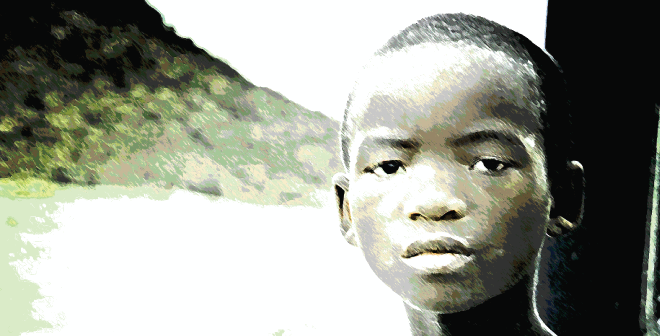
A young boy enters the room adorned in costumes befitting that of a priest. He walks to an imaginary altar, bows and makes a sign of the cross. He then stands at the self-made pulpit, welcomes the congregation - in this case, his roommates - and then shows them, by a sign of the hand, to take their seats. He proceeds to preach the mass, with enthusiasm; an animated farce. Meet Seth, the boy who will never see the priesthood because of his state of health.
When Seth Karinga* (not real name) was growing up he was only familiar to the Catholic practice and he brushed shoulders with the men of the collar, a thing that made him desire to adopt their lifestyle. Seth grew up in an orphanage and the only parents he knew were the priest, nuns and the employees who worked at the home. Seth admired the priests greatly. He admired their humble, but philosophical talk, their saintly attire and their immense knowledge of the bible. He would constantly imitate them and often he would “preach” to the other children in the home.
“I always imagined that priesthood is the life that God had intended for me to live,” he says, “I would have given my whole being to serve God and orphaned children like me. The priests always seemed so concerned with me because I always wanted to serve as an altar boy during mass and was keen in most of the church activities.” Unfortunately, Seth was denied entry into the priesthood program because his HIV test results came out positive. But what does it entail to join in the ranks of priesthood and why is health such a big deal?
According to Fr. Paco Gonzales of the Divine Word Missionaries, the requirements for one to join priesthood vocation are clear: he must have completed ordinary level education and attained a mean grade of C plain and above, he must be a Catholic of good morals and willing to join pre-college for 10 months, study Philosophy for three years and Theology for another four years.
He adds that the candidate should also be able to train in a specific profession, such as communication, teaching or administration. The candidate should be medically fit because there is a lot of rigorous training involved. When I asked about the HIV status he said that normally would lead to disqualification. A social worker, I spoke to at the orphanage, on condition of anonymity, said that she admired Seth’s dedication to the church and she tried to talk to the priests to help him pursue his calling. She helped the boy apply in all the seminary schools within Nairobi and the environs and he was given an opportunity for an interview in two of the schools. Unfortunately, the two schools also denied him admission
because of his HIV status. He withdrew from church activities, and kept to himself. “In our congregation we are very strict with issues of health because if one has severe allergies or any terminal diseases they cannot join,” Gonzales stresses when asked about the priesthood and HIV. But the home, in which Seth is hosted, does not have professional counselors and so his condition is left to its own devise. Dr. Gordon Odundo says that Kenya has only 3 pediatric psychologists which is alarming given the high rate of children living with HIV.
“There are more than 117,000 children living with HIV in Kenya, but the doctors and facilities to cater for them are limited. The ones who are on anti- retroviral (ARVs) treatment are only 46,000 and so you can imagine we have a deficit of 71,000. Many social workers are faced with the challenge of managing the HIV status of the children in homes because they don’t have the expertise to do it.” he says.
Although HIV/AIDS seems to have reached a level of “acceptance” – in terms of management – the Catholic church seems to be a bit hesitant when it comes to it. A chat with Fr. William Owire as to whether his congregation would consider recruiting a person born with HIV virus was interesting. He pointed out that candidates are taken through a thorough medical check-up before being recruited. When in the vocation medical check-ups are conducted randomly.
“If one has HIV then the church may not consider him or her in the congregation because they may not be fruitful as expected. The church invests millions of shilling to educate and train one to become a priest and if they are terminally ill then this would be a waste because the person may die after the studies or shortly after serving which is a liability to the church.” he says. Although a number of people have been known to have quit the
vocation of sisterhood and priesthood in order to have a family or because they are overwhelmed with the celibate life they take an oath to pursue. Paul Odhiambo is one such person, but his reason for leaving was different. He says he was distressed with the discrimination and politics in the church so he chose to become a lay person.
Paul claims that his friend, who belonged to the Apostles of Jesus Congregation - a sort of congregational or priesthood community - was dismissed on grounds of poor health. He quit soon after that as well. His friend, he narrates, had secured a scholarship to pursue a Masters degree in the United States but started ailing while he was there and was put on medication. “My friend’s illness became worse and he was given credit transfer to complete his studies in Kenya. He however became better, worked hard and was able to complete his studies after which he graduated. He was shocked when he got two awards; one for his Masters certificate and the other a letter of termination from his congregation.” Paul feels that his friend – who had kidney problems – deserved support and care from the church. “Some friends and relatives advised him to sue the congregation, so he sought legal advice and a case was filed. But he later dropped the charges, which left his uncle and I baffled. We urged him to reconsider his decision but he was adamant.” Paul states that he always knew that when he joined the Jesuits fathers (another priesthood community) it would become his family and home. He was however disappointed in what he discovered during his 12 years in the congregation. He opted to serve God as a lay person and relinquish from the life of becoming a man of the collar. “I watched my friend fall into depression and slide into a state of hopelessness and then finally succumb to the sickness,” he shakes his head.
This tale is baffling because the church has always been seen as a symbol of peace, love, compassion and unity. Most people always run to the church for refuge in times of tribulation. Where would people run to next? The Catholic Church is always on the forefront in helping Orphaned and Vulnerable Childern (OVC’S) and this obvious discrimination tests it’s compassion.
Every morning I travel to a different planet.I leave my little house in Buru-Buru, a neighbourhood populated by- as far as I can tell- some pretty normal people. My blood is still thick from Boston, in the northeast of the United States, where I lived until I left for Nairobi three weeks ago.
After 45 minutes, or maybe 2 hours if the jams are really bad, the dust and energy of the city hit an invisible wall at Muthaiga Road. This is the first sign that I am leaving Kenya. Just a few more minutes, up Limuru Road, takes me to a place that, I have come to realize, is populated by crazy people; The United Nations I came here to work for three months as an intern for the UN’s humanitarian news service. The plan was simple: arrive in Nairobi and crash at my friend’s house in Buru while I look for my own place and then live happily ever after, preferably with wireless internet.
Step one went pretty well. My friend, Agnes, and her two sisters took great care of me. As much as I enjoyed living in Buru-Buru, I resolved to commence “Step 2” quickly and went about finding the perfect place to rent. My requirements: closer to Gigiri and preferably with some nice and respectful housemates. And it shouldn’t be too expensive. As an intern, I am paid 400 shillings a day. To obtain this perfect apartment, I posted an advertisement on the UN’s online bulletin board: “wonderful and very mature and clean and perfect intern seeks similar to share beautiful home with for three months.” So “Emily” emailed me and we picked a day that I would meet her after work so she could drive me to her house for a look.
Emily’s home could have fit about five of my Buru bedrooms in the living room. She lived there alone because her husband was working in a mine in Zambia. I gasped a little when she told me that because it sounded so hard and dangerous. Until she told me of course he doesn’t actually work in the mine, he supervises people.
On a recent visit, Emily’s husband helped her fire their gardener. It was horrible. Her husband and the gardener argued for six straight hours. Emily cried the whole time. Emily went through the house pointing out all the security features. The electric fence. The dogs. The panic buttons in every room. The sensors on all the windows that triggered the alarm if you hit the glass. Emily had also previously mentioned something about her plates. If I moved in, she had stressed, she did not want me to use her plates. The reason, she said, was because she had gotten these nice things when she got married, and didn’t want anyone else to use them. I told her I understood; I was also recently married and got some nice kitchen stuff that I wouldn’t want to be messed up. But I probably wouldn’t want to live in a place where I would have to eat off the floor. After Emily’s place there was Sweta’s. It didn’t have furniture. And the bathroom was locked. I have no idea what Sweta felt the need to protect under lock and key in her bathroom.
Then there was Jane, a lovely woman but a bare-bones house that wasn’t quite right. She was also touchy about her cutlery. What was it with people and their kitchenware? I did not come to Kenya to steal plates! Another lady at the UN emailed me to say she had a room available and I emailed her back to see if she wanted me to come by her office to talk about it. Finally I responded to an ad that someone had put up on the UN bulletin board just as I had. A beautiful house on General Mathenge Boulevard with other UN workers, and living with a bunch of
other UN employees could be fun; surely we’d have things to talk about. I called the number and an Abdul answered. I was just leaving a church service with Agnes and kids were running around and someone was banging on the newly donated drum set that the preacher had devoted his sermon to thanking Jesus for. So Abdul was rather hard to hear. Plus he had a European accent.
“I forgot to ask you, are there any girls in the house?” I asked him.
“No, no girls.”
“Oh… Well, I’m sorry but I don’t think my husband would like me living with a bunch of guys.”
“We’re a (something I couldn’t quite hear) couple.”
“WHAT?” I shouted back.
“We’re two (something) guys. We’re (something.)
“You’re WHAT?”
“WE’RE TWO GAY GUYS, WE’RE A GAY COUPLE!”
“Oh! Well maybe my husband would be fine with that.”
“YOUR HUSBAND IS NOT FINE WITH THAT?”
Oh boy. Now I had to go see the room or else they’ll think I was prejudiced against gay Europeans. Abdul greeted me and showed me the room I’d be staying in. There were no curtains on the windows, but he said they’d been ordered and should be here soon.
“What about sheets?” I asked, noting the bare mattress. Abdul looked at me as if he was offended. “This isn’t a guest house,” he said. I didn’t really understand the difference
between providing sheets and curtains, but we moved on. Abdul began pointing out the
rules of the house: He and his partner were vegetarians, although it wouldn’t matter for me because they do not allow sharing of food. The cat was to be permitted to go anywhere she pleases, including my room. Music was not to be played in the living room. The search continues….


