Sasa Nairobi
Hosted by Goethe-Institut, contemporary artist Michael Soi presents a series of 17 paintings celebrating women from all over Nairobi, bringing you different takes on the...

Last December we lost two gays mysteriously. The body of one man was found dumped in a trench near City Mortuary along Mbagathi Way, while the other corpse was found at Jamuhuri Estate. The young woman is nursing a drink in a local bar. A group of men approach her table and confront her. A skirmish ensues; they rain blows on her and rip her clothes off.
“We will teach you a lesson today. You will finally know who, between you and us, is male,” hisses one of the attackers. “You will know who has the reproductive organs of a man between you and us.” Blows rain down on her again and again. After what seems like an eternity, as they wrestle her to the floor, she overcomes her initial shock and realizes they are about to rape her. Although she is bleeding from cuts on her body, she finds the courage and reaches out for a beer bottle, breaks it on the floor and tries using it to fend them off. A little too late. They only flee after it becomes apparent that they were not going to succeed. This young woman was lucky, but others like her are not so lucky.
The Executive Director of Gay Kenya Trust (GKT), David Kuria , who narrates this story, says the woman was lucky to have escaped, although she had severe injuries. Sadly, this is not an isolated incident. Kuria says gays experience a lot of stigma and hostility. The society treats them with so much venom; some have been brutally murdered because of their sexual orientation. “Last December we lost two gays mysteriously,” says Kuria. “The body of one man was found dumped in a trench near City Mortuary along Mbagathi Way, while the other corpse
was found at Jamuhuri estate. The gay community faces a lot of disdain and violence and their human rights violated.” Meanwhile, Kate Kamunde the founder of Artists for Recognition and Acceptance (AFRA), an organization that articulates human rights issues for lesbians through performing arts condemns corrective rape. She says that raping a lesbian to change her sexual orientation is the most despicable thing anybody can endure.
“If a lesbian is raped she will most likely end up hating men more, while others may suppress their sexual orientation due to fear of what may result, if she stands her ground as a lesbian,” says Kamunde. “This will mostly develop into emotional distress to many of these women, which may eventually lead to suicide. Most teenagers have actually committed suicide due to stigma from close relatives who cannot accept their sexual orientation.”
Jeff Moses, a gay man, who works at ISHTAR, an organization under Gay and Lesbian Association of Kenya (GALK), says that stigma is rife, even among the police who are ironically supposed to be protecting the citizen, regardless of sexual orientation. “About five months ago one of our gay members was assaulted by a policeman around city centre. He is a commercial sex worker who was waiting for his partner but his mission was cut short when the police beat him, robbed him of his money and phone, leaving him for dead. Luckily, he was saved by a good Samaritan,” Moses says. Jeff observes that, as a gay person living in Kenya, he is defined by fear. He dare not go to certain places, or declare his sexual orientation in particular public settings. “I live in fear,” he says.
“There are restaurants that people would be turning their heads and pointing fingers at me or my gay friends. This makes me feel very uncomfortable. I am very particular to restaurants or joints that I go to.” According to Susan (second name withheld), a counselor based in Nairobi, corrective rape may be a result of many things. She says that many youth are addicted to pornography, which may corrupt their mind and some of them end up committing crimes like gang rape or sodomy.
“In boarding schools, students at times sodomise other boys, especially if they discover they are gay, and girls are raped when they show signs of lesbianism. The society feels like the lesbians and gays deserve to be raped, because they look at them as people who are ill,” she observes.
But what are human right bodies doing about it? There is a lot of dehumanizing crime being committed, which should be reported and the culprits punished accordingly, Susan states. And it is not only in Kenya that stigma is rife. For instance, although the South African constitution legalizes the rights of gays, the society does not accept them. “We have legalized it, but damn, we rape them, stone, stab, and kill them!” says Ms Linda
Mafu of the World Aids Campaign (WAC) in South Africa. Edith Ingutia, a Kenyan working in Namibia, is infuriated by the discrimination against lesbian, gay, bisexual, transsexuaand intersexual (LGBTI) people.
She says South Africa has the same ritual: a community sends men to a lesbian’s home and rapes her believing that this will instill sexual feelings towards men and turn her normal. Instead, says Ingutia, the dehumanizing act repulses lesbians from men even more. “A few months ago a South African lesbian was brutally tortured, raped and murdered. This is gender-based violence; it could happen to any girl even if she is not a lesbian, if culprits to such heinous actions are not punished. Monica Kareithi, a lawyer who fights for the rights of the gay people, of Kenya Human Rights Commission (KHRC) stresses the need for people to understand lesbians, gay, bisexuals, and transgender. She believes that if there could be an advocacy campaign to the community about them, perceptions of them would be less hostile.
“These people are not sick, so no one should impose a remedy for them. Rape is illegal, whether on a gay or straight person, it is a crime against humanity which should be punishablein a court of law,” Kareithi stresses. “If a woman is not sexually attracted to a man, raping only fuels hatred. The woman will loathe men. They could get unwanted pregnancies, sexually transmitted diseases, HIV and suffer low self esteem,” she adds. The problem is further compoundedby HIV and AIDS. According to Helga Musyoki, the programme manager of Most at Risk Population (MARP) at NASCOP, studies show that about 60 percent of men who have sex with other men are heterosexual. This makes the rate of new infections of HIV rise, since they have both female and male partners.
“When we look at the new statistics of MARP in Kenya, currently they comprise one-third of all the new HIV infections. The statistics, however, have not separated them in their various categories, which are MSM, commercial sex worker; the statistics are inclusive of all the MARP,” she observes. Dr. Simon Nyangena of Aga Khan University Department
of Pathology says unprotected anal sex with a person who has HIV or another STD, is the sexual activity with the highest-risk to both men and women.
“MSM’s are at a higher risk of contracting HIV because they practice anal sex, the rectum mucosa (skin on the anal area) is very delicate and sensitive and can easily be torn during the exercise. This makes the HIV virus easily penetrate because of the high risk of getting injuries at the rectum mucosa,” observes Dr. Nyangena.


Hand gestures, smoke signals, tablets, scrolls, books then blogs –this has been the evolution of humankind’s mode of communication. And Nairobi has not been left behind. It is currently hooked to the digital media and has seen the emergence of a crop of “artist” called bloggers. The bold and the creative. Hand gestures, smoke signals, tablets, scrolls, books then blogs –this has been the evolution of humankind’s mode of communication. And Nairobi has not been left behind. It is currently hooked to the digital media and has seen the emergence of a crop of “artist” called bloggers. More and more blogs are opening daily. Pages of our diaries are no longer in the form of paper. Today, we paste personal journals online for the world to see. Our political protests are less about taking to the streets, than they are about organised online dissention.
One unique aspect to the Nairobi blog scene is the number of blogs devoted to social and lifestyle issues. The talk about marriage, fashion, weekend drinking escapades, and politics is rampant in these online alleys.
But why the sudden growth in blogging? Archer, a writer at one of the sites that stands as the voice of men in Nairobi, says that man has many needs and the need to be heard is one of them The stereotype surrounding the Kenyan man is one of the reasons that pushed him and a couple of other writers to open up a site that would “redefine the Kenyan man.”
“We started Wanaume after noticing that the Kenyan man is bashed in every forum available. Wanaume was born to save the situation.” The same sentiments are closely echoed by Mrs. Mwiti, a blogger who shares her journey through motherhood, marriage and family. For her, blogging is a hobby first, then a platform to tell her story.
Another driving force for local bloggers is the need to share knowledge—seemingly owing to the proverbial aphorism that giving is receiving. Rogers for instance, who has built a musically-correct fort at Knoxnation.com says: “It’s an alternative avenue for music lovers like me to keep up to date with latest music that does not get airplay on radio and TV.”
For the artistic crowd, it is an exhibition for their work. Mutua Matheka , a renowned photographer, looks at blogging as a way of sharing his work and experiences to the world. “I want people to know who I am and what I think through my blog.” James Wamathai who runs Wamathai.com , a stronghold for creative writers, says that considering the expense of publishing in Kenya, a blog is one of the easiest and fastest ways for a writer to get readership. “The media is not telling our stories!” He emphasizes.
Now that the Internet seems to have provided freedom of speech, albeit online, one wonders if the clamor of it is loud enough to be called the emerging voice. Icon, a blogger at Diasporadical, which runs social and political commentaries every week believes that a blogger’s voice has proven to be the loudest whisper that one can ever hear. But are bloggers powerful enough to create social change?
Even though he agrees, Mrs. Mwiti disagrees: “Yes awareness is created but is it usually sufficient enough to make people act?” Rogers believes that transparency is an enemy to governments. A good example was the Kenya28thFeb. Organized by Alison Ngibuini, AL Kags and a collective body dubbed Wanjiku Revolt, the initiative called for bloggers to spread the word in their blogs in an attempt to get people to sing the National Anthem on 28th February, at exactly 1 pm. This successfully took place, making headlines in local and international news.
Most bloggers feel an unvoiced conflict between themselves and the mainstream media. However, there are blogs that are said to misuse the freedom that the Internet affords them, crossing the line and going rogue. An anonymous commenter says that some bloggers use it as a tool for slander, “Sometimes they use these blogs to settle scores, publishing
classified information about a person that they dislike or even nude photos,” Questions are also raised as to how reliable they are in getting the facts right.
However, James Wamathai insists on the power of blogs, adding that most media houses have incorporated blogs into their systems.A good example in this case is Capital FM, which has for some time now kept an undefeated online presence. Laura Walubengo, an online editor, says that they have incorporated blogging on their site and adds that blogging is fundamental for any media house that wants to keep up with the online trend.
A source at Nation Media Group agrees that the online community stands as a menacing competitor to the mainstream media, given their instantaneous and timely delivery of news.
However, he says that the mainstream is coping with this by keeping their online sites active and going beyond the ‘what’ of breaking the news and moving on to the ‘why’.
But is someone reading? The page views and the comments seem to be an intrinsic motivator. Currently, most of the bloggers we interviewed fetch between 200-4000 views per post.
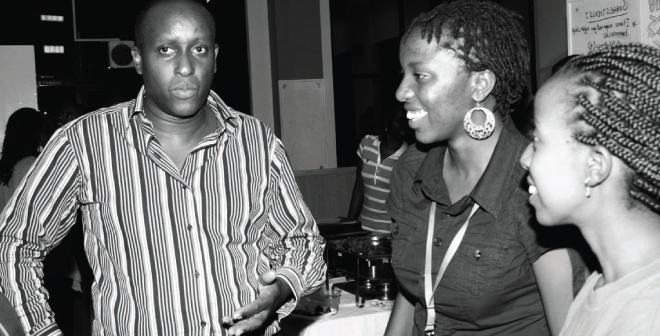
John Waibochi (left) is at the top of the pyramid of tech innovators who are remaking Kenya’s reputation on the global stage. With his company Virtual City Waibochi helped herald Kenya’s arrival as an innovation hub when he received Nokia’s Growth Economy Innovation Challenge Award along with a $1 million investment last September.
The Challenge posed to Waibochi and others from around the world as to develop an idea that could improve the lives of people in the developing world. Waibochi’s solution was Distributor, a program designed to allow small and medium-sized businesses keep better track of their bottom lines in emerging markets.“In the future,” explains Waibochi, “success will depend on ability to adapt to technology and embrace mobility. This is one of the avenues that companies can now easily use to ensure real-time accessto the entire supply chain.” Kenya is fast becoming a globalhub of new technology, riding a wave of innovation being spurred by new mobile and social technologies.
Ironically, it was Kenya’s relatively slow pace of development that made this possible. The glacial pace at which the Kenyan government approached telecommunications infrastructure development through the 1990s allowed the country’s consumers to leapfrog the land-line phase of communications, going straight to mobile technology. This is why Kenyans in the country’s more remote areas can live without electricity but still update their Facebook status via mobile phones. And as mobile phones and the Internet continue their collision course, Nairobi is fast becoming a nerve centre for mobile and web developers. Nairobi is unique because of its diversity. Here you find innumerable NGOs, endemic corruption, rich culture, extreme wealth, crushing poverty, business and countless social and political forces.
These contradictions have allowed the city’s developers to seek unique solutions to both global and local problems. Kenyan startup Ushahidi has become world famous for developing crowdsourcing tools that have been used to independently monitor elections in Afghanistan and track relief efforts in Haiti after last year’s earthquake.And then there is iCow - a mobile application developed by Charles Kithika which allows farmers to monitor the fertility cycles of their animals and pinpoint breeding windows.
Innovations like Ushahidi and iCow were born of Kenya’s complexities. But for Waiboichi, the answer to Nokia’s challenge was simple: bring the products to the people. The Virtual City platform allows businesses to complete automated transactions using handheld devices that are synched with a database, which monitors inventory and is capable of producing reports and issuing orders. Combining these functions in a mobile device allows companies with more rigid business models to tap into traditionally underserved markets, particularly in rural areas lacking infrastructure and development.
The database technology will also help businesses react to changes in demand for their products, providing further avenues for saving money and earning profits. Distributr has the potential to open up Kenya’s countryside. And not only for global corporations but for Kenyan business too by allowing Nairobi’s entrepreneurs to discover new customers in their own backyard. According to Waibochi, Kenya’s vast tea industry is already embracing Distributr, employing it at buying centres across the country.
Virtual City’s innovations are not limited only to sales. The company has developed a raft of mobile solutions for developing economies in industries such as shipping, engineering, and farming. Virtual City’s Agrimanagr platform allows vendors to conduct transactions with farmers across the country and integrate the receipts into a database, which can track deliveries and monitor food supplies at company headquarters. To put it into perspective, the Agrimanagr platform would allow large chains like Nakumatt and Uchumi to buy produce from small-scale, independent farms in rural areas as well as from largescale commercial farms, all with a mobile phone. Behind feted successes like Waibochi, there are hundreds of tech innovators, experimenting with new apps that they hope will find a market in Kenya’s new reality, and beyond. Waibochi, though, has been doing this since the beginning. The developer saw the potential back in 2000, when he founded Virtual City. Now, just 10 years later, Kenya’s IT sector is producing revenues estimated in the billions of shillings and cementing its role as global innovator. “The mobile phone is going to do what the Internet did for the western world – that’s what it is going to do for the emerging markets,” says Waibochi.
“It’s going to be the point of sale device, it’s going to be the computer, it’s going to be
the Internet device.” Thanks, in part, to Waibochi and Virtual City, Kenya may soon be delivering that message (in 4 or 5G) to the rest of the world.

Omondi was expecting to take an underground train directly from downtown Moi Avenue to a rugby training session in Westlands. However, he heard on the radio that the line was not working. He confirmed this as he passed a bus stop, with a digital information display, on his way to the corner shop. When he consulted a Nairobi Metro real-time map on his cell phone, it suggested cycling to the University Way interchange and catching the underground there. The website then guided him through a Route Navigator, which showed him the most bicyclefriendly route at that rush- hour time.
To many, the above may well read like a futuristic fantasy from a slightly surreal metropolis, but great cities are built on dreams. Most of Dubai’s architecture, when viewed on paper, may seem like the product of impossible dreams but these visions have come to life. As technologyand its associated applications evolve, one wonders how these rapid advances will benefit a city’s physical infrastructure. City traffic is one of the greatstanding jokes of the modern age. There is hardly a city in the world where traffic has not choked people’s space and lungs.
How will the next technological leap affect our modes of transport? What’s the future of transportation in cities? Imagine Nairobi 30 years from now. Will it be motoring in a fresh gear or will we simply have dressed-up elements of the past? The answer depends on investment in integrated transport systems. A city with holistic mobility options is exciting, memorable and people-friendly.
Nairobi drives Kenya’s commerce and offers immense opportunities for progressive investors and venture capitalists, who are scouring the continent for profitable returns. City mobility helps attract, retain and influence global human capital’s choice of city settlements. Nairobi’s growing population and the ease of access to the vast market of the East African Community are key attractions for Asian and Western investors who visit Nairobi regularly. The hallmark of a modern city is dynamic mobility. Sound city mobility ensures people, products and services connect at nodes of need at reasonable speed and over reduced distances.
Creative and positive planning styles and good infrastructure can attract meaningful foreign direct investment. Attracting wealthy investors in rail, road, hospitality and recreation would help repair Nairobi’s image as a withering city, and revive tired tourism products.
For now, the traffic in Nairobi is a perfect Catch-22. Most motorists’ actions exacerbate, rather than ease, rush-hour chaos. Drivers’ bellicose spirits and selfishness only make things worse. Nobody measures journeys in kilometres anymore but in hours. It’s almost impossible to predict how long it will take to get where you are going. This costs money because time is money.
Personal mobility is a treasured freedom in the peculiarly individualistic age in which we live. But there are different levels. Car drivers enjoy certain liberties but others, like pedestrians and cyclists, are condemned to be bullied. Motorcyclists know this too well. Nairobi’s transport network is not designed for the pedestrian, mkokoteni (handcart) or boda boda operators (cyclist) or any form of non-motorised vehicle. But have you ever wondered why non-motorised means of transport are still prevalent and growing?
Small micro-enterprises form the bulk of the city’s businesses. The informal sector favours non-motorised transport because they are affordable, available and accessible. This is the reality. It would be more practical to introduce order to this informality rather than to challenge it. The further one drifts from the city centre, the more broken down the infrastructure becomes, hence the proliferation of non-motorised transport.
Whatever your preferred mode of transport, the biggest challenge for many people here is getting to work. Some corporations have ceased developing massive company headquarters but sadly others are still fixated on this planning mirage. These giant buildings are security risks,inefficient and concentrate chaos in one area. A drive through the Upper Hill area shows how city centre menace is creeping in fast. Organisations that fled the CBD and built corporate head offices here are findingthemselves caught up in the same traffic gridlock they thought they had fled. Technology can be used to assist planning and address these problems. The Kenya Revenue Authority got rid of the mammoth crowd that used to gather in its front yard after adopting an e-tax return system, and the same can be said of the adoption of e-money transfers for power Car drivers enjoy certain liberties but others, like pedestrians and cyclists, are condemned to be bullied.
Motorcyclists know this too well. and water payments. Extensive adoption of agent commercial banking, where banking services are devolved to smaller, authorized partners not necessarily operating in traditional bank halls, would render these huge halls obsolete, also easing pressure on the city’s roads.
Although Nairobi has become digitally decentralized (thanks to the fierce competition between mobile phone companies), a successful physical decentralization would enhance the city’s efficiency because it would mean shorter distances between frequent commuter destinations. Here’s an idea: widen roads like Peponi, Ring Road, Argwings Kodhek or James Gichuru. This would ease traffic pressure. Innovation flourishes in a city that gives its residents multiple means of getting around. Nairobi needs more transport options to spur creativity and innovation by eliminating impossibilities. Although much global business has moved to the virtual space, investors favour cities that help their residents make business connections.
Then there is the issue of insecurity, which has hammered city nightlife.Recently Nairobi City Council sought expressions of interest from surveillance companies. This is a step in the right direction. A network of CCTV cameras, observing streets and public areas, would boost security and encourage urban exploration. We need to bring the people back onto the streets because streets are safer if they are busy and overlooked by apartments or homes. Increased CCTV surveillance would guarantee city spirit for those who live, work, play and shop past regular office hours. A new night lifestyle would emerge. And why not, one day, a Nairobi Street Carnival?
Urban planning, investment and technology must converge to create a place where beauty and pleasure come together. Investment in good infrastructure remains attractive for purely financial reasons as well – if you invested in a good bus and coach service in Nairobi, you would reap healthy rewards. The flip side is that failure to invest in transport will harm Nairobi’s economic prospects.
Any improvements must take into account the big picture. Planners need to focus on inclusive design – Nairobi remains a collage of parts, some functional and others derelict. Tourists like places that feel solid and function as a whole. Nairobi scores low on inclusive design. We need more signs in foreign languages. We need more ramps for wheelchair users. Property owners should pave streets to make it easier for physically challenged residents to get around. Childfriendly toilets are needed in malls as are rest rooms for wheelchair users. These are all big changes for a city that is growing bigger every day. But a little optimism can go a long way towards turning dreams into reality
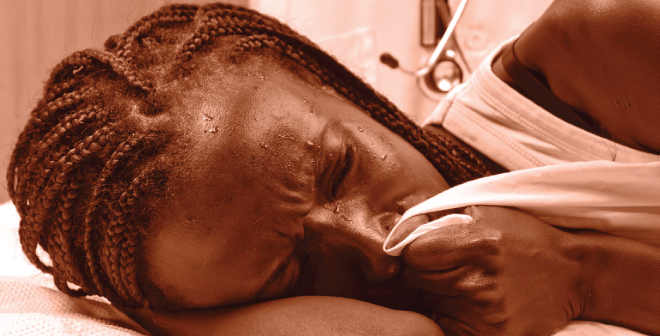
Most of us probably associate birth with celebration and gifts but it wasn’t like that for Margaret Nguvi, a hardworking coffee picker from Makuyu. Margaret found out she had cervical cancer just before giving birth to her seventh child. After a Caesarean at Kenyatta Hospital, John Mwanzia was born.
His sick mother couldn’t pay the bill so she was detained in the hospital. She was not being treated for her cancer, and did not get enough food. After KTN aired a report on her plight, she was kicked out by hospital authorities, embarrassed by the publicity. This was not the end of her nightmare, but now Margaret was not alone.
Dismayed by the television report, benefactors helped pay for cancer treatment at Nairobi West Hospital. Among these well-wishers was Pollyne Owoko, a programme manager for Wema Foundation, which aims to empower women and children. Owoko was shocked by Margaret’s case. “It never quite touched me until I saw Margaret (on television) with this beautiful baby, suckling,” the 33-year-old said. “It broke my heart.”
Margaret, who was in her mid-30s, died in hospital in December 2010. She never got to go home after John’s birth and the mother-of-seven was traumatized by her absence from her family. “People like Margaret never had an option,” says Owoko. “My hope was that Margaret Nguvi would survive to become the face of reproductive health. We tried so hard to save that woman but I guess she gave up.”
There are no easy answers to the question of how to provide adequate health care to Kenya’s most vulnerable people.But almost everyone agrees that detaining patients is not the answer. It costs hospitals money – they have to feed the detained and they take up beds. Also, there is little chance the patient will eventually be able to pay a bigger bill.
“(Detained patients) get fed last, they get very little food… they are mistreated,” says Wangui Mbatia, executive director of the Kenya Network of Grassroots Oganisations (KENGO). “You get patients with a sense of extreme powerlessness. They can’t do anything about their situation … and the bill is climbing.”
Hospitals say they cannot let every patient who says they can’t pay just walk out, and that they have fee-waiving committees to assess individual cases. But Mbatia, whose group regularly visits hospitals to count “long-stay” patients, says the fee-waiving committees don’t meet regularly enough while social workers, who should be doing background checks, are often inefficient or incompetent.
In September last year, Public Health Minister Beth Mugo reiterated a 2007 government directive waiving all maternity fees in public hospitals. There is also a directive saying care for under- fives should be free. But in practice, things are very different. Mbatia started working on this problem four years ago after one of KENGO’s members asked for help to clear a 6,000 shilling-bill at Nairobi’s Pumwani Maternity Hospital. Mbatia and a friend
paid out of their own pockets. Then, there were more requests and she soon realised that treating the cases on an ad hoc basis was impractical. KENGO decided to press policymakers on the issue and now lobbies for the release of patients. But despite some individual successes, things have changed little. Mbatia went to Kenyatta’s children’s ward last November and found under-fives detained, usually on their own because this is a cheaper, though heartbreaking, option for poor parents. “It’s cruel, and inhuman and….” Her voice trails off. She has more stories that lift the veil on the health
system in one of East Africa’s richest cities. “Take the situation, say in Pumwani, where a mother who has had a stillbirth is detained in a maternity ward with other mothers with little children … you can imagine the psychological torture of that,” she says. “We found one woman on the verge of suicide because every time babies cried, her breasts would
release milk and she didn’t have a child to feed.”So how does the National Hospital Insurance Fund fit into this picture? With only a fraction of Kenyans registered as members, it does not have the resources to provide adequate care for the most needy. Mbatia says that even the proposed new minimum monthly fee of 150 shillings is too much for those millions who live hand-to-mouth. “If you are strained for cash, then the NHIF is really a luxurious expense,” she says, adding that many services are not even covered.
Julius Muia, secretary of the National Economic and Social Council, says more people must contribute to a central insurance fund to pool the risk, but also stresses that people need to be educated as to why. This fund must also be able to deal with a larger pot of money without falling prey to corruption. Muia, who is also a chartered banker, believes more money can be found. For example, some people in the informal sector earn enough to pay into the NHIF.
“The amounts people spend on a pay-as-you-go basis are quite substantial but … you don’t have the benefit of channelling (these funds) together and organising for the provision of services in a more anticipatory manner,” he said. The money that is already available could also be used more efficiently. There could be a mix of public and private services, Kenya could produce more generic drugs and make its own medical equipment. “My contention is that money has never been the problem,” Muia says.Some might point to the all-too-obvious wealth of officials, the waste generated by corruption and the ostentatious riches evident in Nairobi to back up this contention.
Better preventative health care and education could also help by making sure people don’t get to the stage where they have to opt for expensive hospital stays. Education needs to encompass life-skills and not just academic facts, Muia said. Owoko believes that educating women on the merits of contraception is another piece of the puzzle.
For Mbatia, one thing is clear. Kenya needs a free, universal health care system and she dismisses the idea that this is too expensive.
“Can Kenya afford not to have that?” she asks. “Take the “We found one woman on the verge of suicide because every time babies cried, her breasts would release milk and she didn’t have a child to feed.” case of a woman who has had a normal birth at a government
hospital. This is a person who has barely used any resources. If you detain that person for a week, you must feed that person, there must be round-the-clock care, so here you have a government that is actually comfortable with increasing bills to punish patients,” she says. Owoko and her friends continue to help Margaret’s family. “I was so happy to see (baby) John two weeks ago. He’sseven months, drinks milk from a cup, eats food,” she said.
Her group, which has a Facebook page (Saving The Life of Margaret Nguthi) for donations, has also rented a ½ acreplot for Margaret’s husband to farm. But despite these positives,
Owoko is still upset over Margaret’s death and the ordeal of her last months. “When I think of her, I feel so bad. I feel like crying even now. She was a young woman … there is so much
to do, like seeing your children grow up. Ah, it pains me. How many Margarets do we have?” she wonders. “This is an issue that needed to be dealt with yesterday.”


